09Nov
Scott Douglas Jacobsen says it simply in this interview. I love interviews. I love conversation. That love became In-Sight Publishing and In-Sight Interviews, now more than ten thousand articles and interviews across two hundred outlets. In this conversation with CAJ International Magazine, he explains why long form interviewing still matters in a short news cycle. It gives space for context, clarification and follow up. It lets people settle into their natural rhythm of thought. He speaks from Kyiv under air raids, from classrooms and fellowships, and from years covering human rights, secularism, basic income and press freedom. He speaks with gentleness about disagreement and about mistakes. He speaks about journalism built on partnership rather than domination. He also brings an offer. Let us co-found African Journalists Talk Policy, and let African voices lead debates. This is an interview about truth, patience, and why listening remains the most radical act in journalism today.
You founded In-Sight Publishing in 2012 and now have over 10,000 articles and interviews across 200 outlets. What gap in independent journalism did you originally want to fill, and how has the mission evolved?
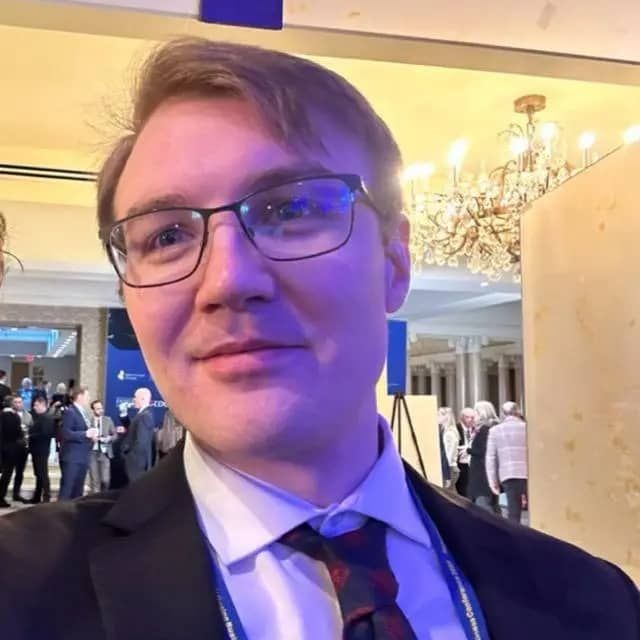
Scott Douglas Jacobson
The journal began in 2012, and In-Sight Publishing began in 2014. The journal is now titled In-Sight: Interviews. The publication total includes articles, interviews, and republications from older internal analyses or tallying. There are more now and others uncounted. I created a space for sustained conversations where people could explain their work and ideas in depth. My original motivation was a love of conversation and interviewing. I genuinely love interviewing and conversation. This became clearer as institutional models shifted, particularly around business models. On the one hand, institutional journalism can provide greater financial security while imposing editorial constraints. On the other hand, independent journalism provides editorial autonomy, while institutional identities can form within it. Therefore, independent journalism does not necessarily remain non-institutional. To the bottom of the question, the ontology of the journalist, the narrative building, remains the same as ever for me: I love interviews. I love conversation and learning from individuals who spent a lifetime studying a subject with a passion. Every bloom in professional life sprouted from this flower. Let’s say something local: Costus spectabilis. I need periodicity, though. I need time for extensive, deep contemplation, self-reflection, and feeling through my sentiments. Obviously, various formulations of artificial intelligence alter the field - three routes forward: Rejection, replacement, or integration. Rejecting new tools seems implausible given their ubiquity. Replacement of media personnel seems unreasonable to me. Integration means constant progression with novel tools to improve and improve the profession's human-in-the-loop processes.
Independent Interview-Based Journal uses long-form interviewing as a method. Why do you consider long-form interviews more effective for truth and human rights reporting than the short news cycle?
Long-form permits extended coverage of subjects addressed in short-form coverage. So, with long-form interviews, you gain space for context, clarification, and follow-up. In my interviews, extended listening helps individuals settle into more natural rhythms of thought and expression. Interviews become an easier delivery mechanism. Short-form can work when the subject matter is specific, or the topic is advertising. Truth in life tends towards the complex. Longer conversations can better approximate reality with more fidelity. Arenas and topics subject to lies, distortion, misinformation, disinformation, etc., retain weaknesses and can lean toward the false rather than the true if there is a lack of carefulness.
You write for International Policy Digest, The Good Men Project, The Humanist, Basic Income Earth Network and others. How do you balance editorial independence across multiple platforms with different ideological leanings?
If we agree on relevant subject matter, or if I am permitted to express myself freely in that regard, then we have allegiance: Not in totality, typically, but in the peculiarity of human life in some particular aspect; there’s a mutual respect. The strengths of more open societies are a freer press. A freer press means more idiosyncratic, or maybe syncretic, perspectives on human life. How many Nigerians necessarily agree with their spouse on any particular thing? Say a Northern Nigerian and a Southern Nigerian, a Sunni Muslim and a Protestant Christian, marry; they may disagree on a few things, even many, but a common partnership and love which transcend them form the bond. It’s okay to disagree. People still form families and have children despite innumerable surface-level contradictions. By some miracle, people manage to partner under such apparent paradoxes and convince God to form a new soul from them. Gentleness is largely learned on many subjects, though. I’ve learned more gentleness with others and to myself, frankly. You will make mistakes. Those mistakes should not define you; they should refine you. “Better” is a moving target, an adaptive aspiration. Similarly, editorial independence - independent journalism with a mixture of freelance and institutional - amounts to such a marriage of a Northern Nigerian and Southern Nigerian of different religious orientation. ’Peculiarities of human life necessitate adaptability,’ even in a “balance [of] editorial independence across multiple platforms with different ideological leanings.”
As a member of the Canadian Association of Journalists, PEN Canada and Reporters Without Borders, what practical protections do these memberships offer independent journalists facing political pressure today?
I’ve been subject to harassment and defamation for years. Each one failed and eventually fell by the wayside, but truth and integrity win in the long run. Individually, it is emotionally difficult. When covering controversial subjects or encountering potential backlash, emotional pacing matters. When you start, a lack of support in difficult times makes this clearer. We need international integration of journalistic best practices, advice, emotional support, and solidarity. Soft times and hard times exist for everyone and every society at different times. For journalism, we live in a hard time. Therefore, we need more Global North integration and networking. You remain part of the solution. African journalists matter. Institutions provide professional networks, advice, advocacy, and lessons from veteran journalists. Reporters Without Borders also provides assistance programmes and access to insurance and protective equipment under certain conditions. In McLuhan’s terms, we live in the Global Village. No society or culture holds total wisdom on any given subject. Therefore, we must learn from one another. Institutions provide a basis for centralizing this.
You have covered the war from Kyiv, including air raids and civilian trauma. What did you observe about journalists' role under bombardment that Western newsrooms miss?
The issue I would emphasize is the gap between outside commentary about what Ukrainians should do and what Ukrainians themselves say they want. Under bombardment, journalists have to report both the attacks and the lives and decisions of people living through them. Reporting from Kyiv should place Ukrainian voices and reliable public-opinion evidence at the centre of that discussion. There is also an operational discipline under an air raid. Physical safety comes first. You should get to a shelter and follow official alerts. Kyiv’s city administration publishes alerts and all-clear notices via its official Telegram channel. A monitoring post is a lead to check. Journalists still have to establish what happened before publishing it. We all seem to do this to one degree or another. Commentaries on things a population should do at x, y, or z time. If the press is relatively free and the government isn’t supremely autocratic, theocratic, or centralized to an extreme extent, then third-party, even national, surveys can indicate the temperature and tenor of public opinion. For example, does the population approve or disapprove of Zelenskyy? Does the population want an election? Does the population want territorial concessions of illegally annexed land by the Russian Federation under the Kremlin and President Putin? Etc.
You focus on women's, children's and Indigenous rights. Based on your qualitative research with women scientists, what institutional obstacles still exist in academic and media institutions?
It depends on society, generation, and discipline. In some societies, women’s educational attainment rates outpace men’s. In other societies, women’s educational attainment remains lower. Rather than stressing a 50:50 split between men and women in the natural and social sciences, a 60-to-40/40-to-60 range may better account for generational shifts and the cultural emphases of disciplines needed for their industries. This is my proposed policy range. It aims to assess representation without treating every departure from exact parity as proof of unequal opportunity. It allows for market fluctuations and differences in disciplinary participation over time. Women form a majority of the psychology workforce in the United States and of medical students in Canada, while men remain more numerous in physics and engineering. In older generations, men tend to hold more influential positions. Among young adults across OECD countries, women have higher rates of tertiary educational attainment than men. These educational gains do not automatically translate into leadership positions. Recruitment, retention, promotion, and access to funding shape who attains those positions. The asymmetry is generational in one sense. It also reflects differences in preferences, opportunities, and cultural expectations. Across society, generations, and disciplines, we see these differentiations. The issue is less about hard numbers for a green check mark and more about a range of views delegated by society and determined by relevant equal-rights organizers within societies, while bound by international standards.
Your work spans secularism, humanism and human rights. How do you navigate reporting in countries like Nigeria where religion and state are intimately intertwined?
The hardest balance for most societies: Religion. Why? Because religion continues to be a fundamental component of social, familial, and communal life. Religion influences family life, communities, institutions, and politics. I understand it as a reflection of our nature. And we have a nature. We evolved in certain paths. We develop in specific ways, while speciation occurs across populations over generations. The real question is how faithfully we can characterize our nature. Developmental psychologists have documented children's tendency to attribute purpose and agency to natural phenomena. We attribute spirits, energies, and personalities to the inanimate. These cognitive tendencies contribute to supernatural belief alongside cultural learning and institutions. Some do not have it. Many do. Some have extreme versions of it. Religion, superstition, and supernatural belief draw on these tendencies in human psychology. Its influence differs throughout societies. However, it is incomplete, not total. Therefore, any legitimate governance model will require bifocal flexibility. One welcoming those who believe in numerous faiths and those who left, reject, or grew up without religion. Witchcraft allegations cause enormous harm to at-risk communities in Nigeria and beyond. How to manage the reporting? Appeal to the better nature of cosmopolitan religious believers and to atheists, agnostics, and others, with human rights, specifically freedom of belief, religion, and conscience. Freedom to hold, change, or reject a belief is absolute. Religious practice is subject only to restrictions permitted under human rights law. Non-believers get to live without it. In Stalinism or in Communist China, we see state atheism and its impact on religious believers; in theocracies, we see the impacts on non-believers and religious minorities. Secular authority protects freedom of religion and freedom from religious coercion. What is the appropriate balance, the hardest balance? Equal rights and freedom of conscience for believers and non-believers. Reporting on this knife edge can work - my advice: Wear thick shoes when you walk.
Basic Income is one of your core beats. From your reporting, what is the strongest empirical evidence that basic income can work in African economies with a high informal sector?
That’s true. On and off, though, time and focus are limited. I see redistribution in some form, whether universal basic income, negative income tax, or some other formulation, as a necessary response to the automation of contemporary human labour and the evolution of the nature of human life and human labour. Universal basic income and negative income tax are distinct policy designs. As we see with the strength of a horse, a gorilla, a bull, the ox, a forklift, and others, human strength has become less important for tasks transferred to animals and machines. However, we still see the wages of human physical determination in the Olympics, MMA, boxing, Strongman competitions, and other areas. Humans continue to engage in these enterprises. They become increasingly boutique, handcrafted, or popularized outside of mass production as mass entertainment for human-level achievement. Outside of these, though, forklifts work in warehouses with some supplementary human strength where appropriate. Many other non-human animals are stronger than humans. The use of animal power expanded with agriculture and husbandry, thousands of years before the Industrial Revolution expanded mechanized production. It wasn’t our strength, but how we used our strength and others’, and how we organized processes in society. Now we're in another rapid transition in the cognitive space. We see this with the addition of computation engines specified to particular domains like Go, Chess, natural language generation, arithmetic, mathematical formulation, and calculation: their adoption changes workflows and the tasks people perform. As we lose some work and some meaning for the work, I see basic income, in some form, as a necessary response. Machines automate tasks and change the demand for human labour. A publicly funded income floor is one response to the resulting loss of earnings. Some experiments in African economies examined this. A randomized experiment conducted with GiveDirectly in rural Kenya found basic-income payments increased enterprise activity and income. Work shifted from wage employment towards self-employment. Lump-sum transfers produced similar or larger economic effects than long-term monthly payments. We need more research, and fast. We cannot necessarily apply findings from North American or European universal basic income economies to an African context. Some African governmental and sociocultural contexts may have similar elements. Therefore, we should stay mindful: Same species, different contexts. Fundamentals can function everywhere while higher-order principles may require contextual nuance and local expertise. It will also depend on whether an individual African population in a state wants basic income. Some may not; others may. The country’s citizens and leadership must decide. Africans should lead African efforts here. Regardless, in a highly informal work sector, it could provide a buttress against fluctuations in earnings, help households meet food and housing costs, support recovery from armed conflict or natural disaster, or support work in the creative sector, e.g., journalism.
With over 2000 publications on The Good Men Project alone, what is your writing and research workflow that allows such high output without impairing depth and fact-checking?
A solid senior editorial team promotes my work, my writing, and my interviews, so full compliments to the team there. They have been tremendous since the beginning. I try to keep things as simple as possible but not simpler. For interviews, find an interviewee or accept an invitation, then schedule the interview. Once scheduled, agree to terms in a human-to-human way. Research those terms; whether typed, video, or in person, send the biography and questions for review, or conduct the interview. The interview is the most meaningful and the smallest part of the process. Take notes, whether digital or written; if you can't take a system of notes with you, review every detail beforehand. Use what feels comfortable to individual temperament; finish the interview; maintain positive relations; try for strengths-based interviews; if they are an expert, have them speak to this rather than not; they can speak, as experts in a broad sense based on life experience or story, institutional representation and authority, relevant credentials, or work experience; from there, this becomes a verbal dance. From there, transcribe or translate-transcribe, edit for grammar, separate factual claims from opinion, be proactive in corrections but verify with the interviewee if this is the intended sense and statement by them if they have time or if you have time; everything requires a certain boutique or individual consideration, then format and send to the editorial team for review and subsequent rejection/acceptance. Some less, some more. Experts, by their nature, have depth.
In-Sight Publishing has two ISBN ranges. What is your model for publishing and distributing independent books outside traditional gatekeepers, similar to what Wanzami TV is doing for film?
Through ISBN Canada, my registration was limited to one ISBN range, so I applied for another to add more books. My two ISBN registrant prefixes are 978-1-0692343 and 978-1-0673505. I will expand this later. This area needs improvement and a change in the overarching publishing structure. Gatekeepers exist for reasons. For one, they provide necessary content filtration. For two, they set a norm. At the same time, independents can work without that kind of filtration or with content outside the norm. I see this less as an adversarial relation and more as an informational-publishing ecosystem. I wish Wanzami TV success.
You have held academic fellowships, including a Tobis Fellowship at the University of California, Irvine. How has academic affiliation strengthened your journalism ethics and methodology?
Some academic and institutional roles include three Jerome and Hazel Tobis Fellowships, Francisco Ayala Scholar, and research and outreach appointments at UC Irvine; co-founder, Administrative Director, and Science Journalism Fellow at the Canadian Quantum Research Center; and Media Fellow and first member at Intercontinental Connection of Journalists. It provides institutional legitimation. Interactions with other academics broaden my considerations, which is a real strength of Academia. One part of Academia argues for intellectual diversity; another for ethno-cultural representational diversity. Both seem reasonable in different ways. Both have helped me: diverse views and diverse life-background experiences.
Disinformation and AI-created content are rising. What technical editorial standards does In-Sight use to verify interviews and prevent manipulation?
The popular conversation is inaccurate and grounded in misconceptions. This builds on the prior point about integration: AI assistance has become common in journalism. UK survey of 1,004 journalists (2024-2025): 56% used AI professionally at least weekly, e.g., transcription/captioning, copy-editing, and generating first drafts. A 2026 study in a local Lagos sample found 307 of 360 respondents (85.3%) used AI for news reporting, including transcription, idea generation, and grammar checks. The Thomson Reuters Foundation’s survey across more than 70 countries found that 81.7% used AI; only 13% reported an official workplace AI policy. Therefore, AI, primarily LLMs, are here. They function ubiquitously in workflows across industries worldwide. The question isn’t use, but the degree and usage. Many of the same methods as always matter: consent where relevant, transcription clarification, separating fact from opinion, and correcting verified errors.
You were recently appointed Editor of Canada and Ukraine Affairs at Times Asian. What does this cross-continental role tell us about the future of Global South and Global North journalism collaboration?
It’s a great honor, and I owe it to Raju Lama. I'm grateful to take on the position; the principle is simple: In a global world, information deliverers need cross-border collaboration and solidarity. For centuries, people have talked about the world as smaller and smaller. Now, we are here: Act accordingly.
PEN Canada defends freedom of expression. From your perspective, what are the top three threats to press freedom in Africa and Canada today?
In Africa, the main threat may be countries with lower press freedom, driven by both internal problems and outside pressures. According to the official RSF 2026 World Press Freedom Index (Africa region), the five African countries with the highest press freedom rank and overall score are: South Africa (21st, 77.95), Namibia (23rd, 76.97), Seychelles (35th, 73.04), Ghana (39th, 72.20), and Cabo Verde (40th, 71.98). The five with the lowest press freedom are Eritrea (180th, 10.24), Djibouti (167th, 25.04), Sudan (161st, 29.02), Ethiopia (148th, 34.66), and Rwanda (139th, 39.58). Therefore, as a point of regional reflection, what are the top five doing right, and what are the bottom five doing wrong? Use the practical methodologies of the top 5 to address the flaws in the bottom 5. If even one African nation improves press freedom, regional press freedom will increase as a result; for example, via addressing military juntas, the criminalization of journalism, armed conflicts, media economic pressures, and political instability and social insecurity. Canada ranks 20th out of 180 in the same 2026 index with a score of 78.76. Issues include coverage of Indigenous rights and land disputes as well as online harassment directed particularly at female and minority journalists. Every issue for journalists is relevant and serious, within context.
Many African journalists struggle with monetization. Wanzami TV gives 70 percent to filmmakers on pay-per-view. What comparable direct monetization model can independent publishers adopt?
It’s a legitimate quandary. We exist in the middle space between realizing this and transitioning away from large-scale domination. Many influencers and journalists seem to override this via the creation of a company as a brand of one, i.e., where they are the brand.
Your Jacobsen Bank is a bibliography index of your work. Why did you create an open index, and how can African journalists build a similar digital archive for credibility?
I kept seeing publications rise and fall, so I decided to archive my materials as they rose and fell in parts. Consider this an international, multi-generational gift from a partial librarian of people throughout the 21st century, in all forms and contexts. Differentiate the relevant criteria you want, then formulate an organizational model and get to work: It takes time. Repositories of African literary excellence might be a wonderful resource for the region and the world, an absolute gift. Start with a simple catalogue: title, author, publication date, outlet, original URL, archived URL, language, and rights.
You have interviewed diverse thinkers regarding partnership versus domination systems, referencing Riane Eisler. How can African media apply the partnership model to reduce conflict reporting?
Riane Eisler’s work focuses on power in a broad analysis. Partnerships embody accountability, care, gender equality, mutual respect, and shared responsibilities. In journalism, especially in interviews, care, scrutiny, responsibility in transmitting information, and so on remain important. Women and men must be involved together in peace processes. Women continue to be essential to just and sustainable peace. UN Women’s review of 57 peace processes in 2025 found that women averaged 5% of negotiators and 14% of mediators. Negotiation and mediation efforts require more women. Men may lead most political appointments However, at the peace table, these strengths and representations should guide broader inputs for consideration in peace processes. The African Union and UN Women’s reporting handbook encourage broader coverage of women’s roles in conflict. Ubuntu culture and communitarian traditions may strengthen these integrated efforts. African journalists may reference: The United Nations’ Women, Peace and Security agenda, Security Council Resolution 1325 (2000), and Resolution 2493 (2019).
Reporters Without Borders tracks press freedom rankings. Canada ranks high, but Nigeria ranks low. What structural reforms should the Congress of African Journalists advocate to improve Africa's ranking?
Nigeria ranks 112th out of 180, with a score of 48.11. The lowest subranking is 149th in journalist safety. Therefore, my main recommendation is to focus on institutional and culturally appropriate ways to protect journalists' integrity, safety, and well-being on the job. UNESCO’s 2026 report, published on November 2, puts global impunity for journalist killings at 86%. The UN Plan of Action on the Safety of Journalists and the Issue of Impunity addresses prevention, protection, and prosecution. How can Nigerian journalists be kept safe in Nigeria? The structural reforms exist there.
What advice would you give to CAJ as we build CAJ International Magazine and CAJ Award Academy to ensure editorial independence and avoid a pay-to-play perception with honorarium awards?
Consistency is more important than big victories. Any financing should remain independent and not influence editorial decision-making. Look for a broad range of African journalists to improve overall presentation of African issues. If recipients receive money, the issue is whether funders influence the selection. If nominees pay money, the issue is whether recognition is being sold.
Going forward, what is your vision for collaboration between In-Sight Publishing and the Congress of African Journalists to amplify African voices in global policy debates?
Let’s co-found a podcast together, focused on these issues: African Journalists Talk Policy. I am happy to host it and interview whoever you feel is appropriate.
Comments
