04Oct
By Donald Tlaka , Johannesburg, South Africa
The relationship between South Africa and the United States has entered another difficult phase, raising a question that would have seemed improbable only a few years ago: can former president Thabo Mbeki help repair a relationship that increasingly appears to be driven by deeper strategic and political disagreements?
The question gained new significance after US Ambassador to South Africa Leo Brent Bozell III publicly identified Mbeki as someone with the stature and diplomatic experience to help break the impasse between Pretoria and Washington. Bozell described Mbeki as a veteran statesman capable of commanding respect in both capitals.
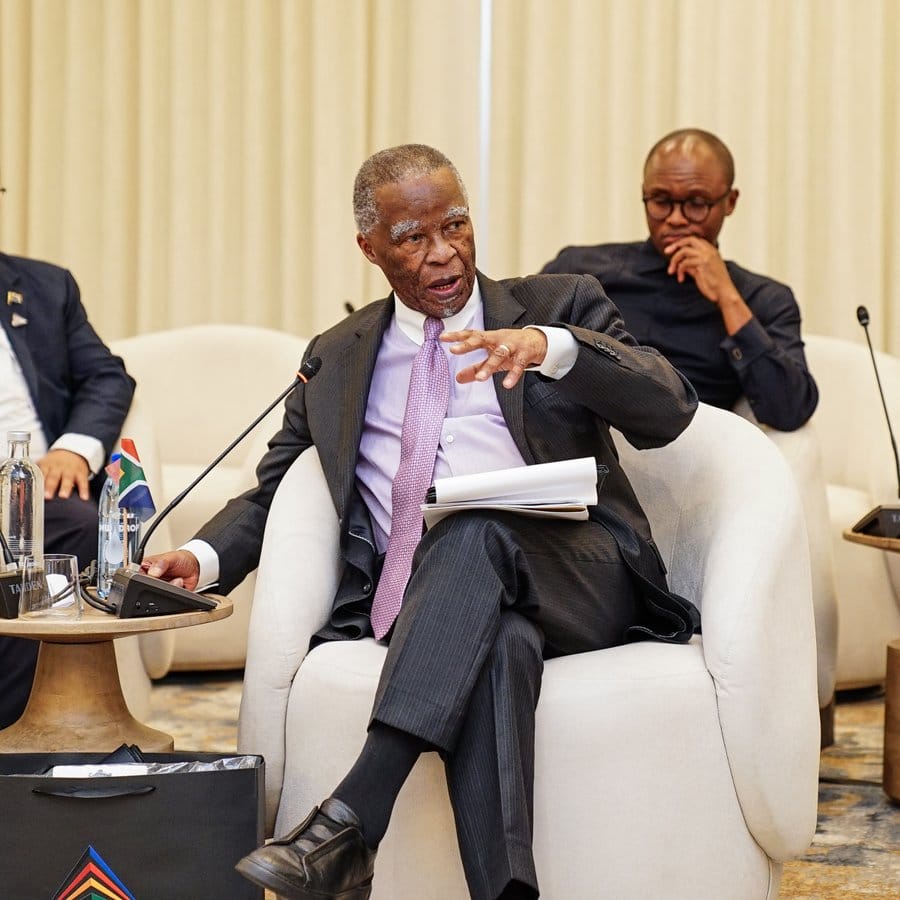
Former South African President Thabo Mbeki
But Mbeki’s possible involvement should not be confused with a simple diplomatic rescue mission. The problems between Washington and Pretoria go considerably deeper than personalities. The latest deterioration follows Washington’s September 15 announcement of visa restrictions against certain South African nationals connected, in the US government’s assessment, with policies involving uncompensated land seizures, race-based discrimination and incitement of violence. Pretoria rejects these characterisations and maintains that its policies are consistent with South Africa’s constitutional order and sovereignty.
These restrictions are only the latest development in a relationship that has already been affected by trade disputes, the future of AGOA, US criticism of South Africa’s foreign policy, reductions in US assistance and disagreements over South Africa’s position on Israel and other international issues. Washington has also imposed a 30% tariff on South African imports, while uncertainty remains around the country’s longer-term access to US trade preferences. For South Africa, this is not merely a diplomatic dispute.
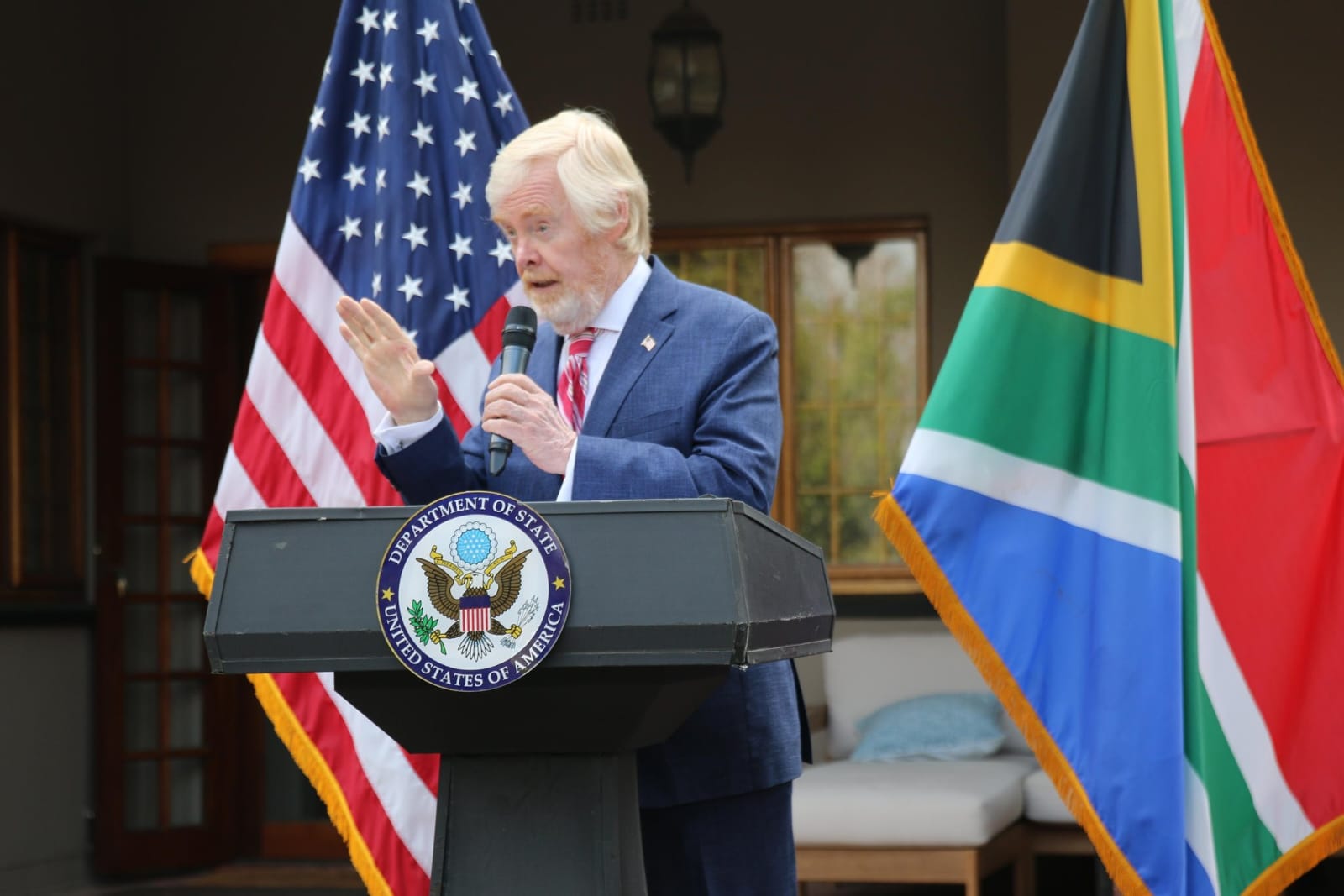
United States of America Ambassador to South Africa L. Brent Bozell III
The United States remains an important market, investor and development partner. Consequently, prolonged tensions have potential implications for trade, investment, technology, development cooperation and South Africa’s broader economic outlook. Mbeki brings something different to the table: history, diplomatic experience and relationships across political divides.
As president from 1999 to 2008, Mbeki developed a reputation for engaging extensively in African and international diplomacy. His foreign-policy approach placed South Africa firmly within the Global South while maintaining relationships with major Western powers. Importantly, Mbeki has also recently spoken publicly about the importance of maintaining friendship and cooperation with the United States.
At a US Embassy event in July, he described the relationship as one based on shared democratic ideals and mutually beneficial cooperation, while recalling the role played by American institutions and activists in the struggle against apartheid. That history may explain why Washington sees him as a potentially useful interlocutor. But there is an important distinction between being able to open a door and being able to resolve what lies behind it. Former South African ambassador to the US Ebrahim Rasool has argued that the dispute cannot simply be solved by appointing a prominent mediator. His assessment is that the disagreement is rooted in broader political dynamics rather than the personalities of individual diplomats.
There is an important point here. Even the most experienced mediator cannot negotiate away fundamental disagreements over: South Africa’s land reform policies; Employment equity and transformation; US concerns about race and minority rights; South Africa’s relationship with China, Russia and Iran; Pretoria’s position on the Israel-Gaza conflict; Trade and tariff policy; And the future architecture of US-South African economic relations. These are questions of national interest and foreign policy, not merely misunderstandings requiring better communication. Nevertheless, Mbeki could potentially make a contribution in three areas. First, restoring communication. Diplomatic relationships deteriorate rapidly when governments begin communicating through public statements, sanctions and media interviews rather than direct engagement. South Africa’s current ambassador to Washington, Roelf Meyer, has already emphasized dialogue as the starting point for resolving the dispute. Mbeki could complement that process by providing an informal channel between Pretoria and Washington.
Second, reframing the relationship around mutual interests. The relationship should not be reduced to disagreements over race, land or geopolitics. There is a substantial economic and strategic agenda on which the two countries can cooperate: investment, technology, energy, critical minerals, trade, security, education and entrepreneurship. A reset based on practical interests could create space for disagreements to be managed rather than allowing them to define the entire relationship.
Third, rebuilding strategic trust. Trust cannot be demanded. It has to be rebuilt through sustained engagement and concrete outcomes.
For Washington, that means recognizing South Africa’s constitutional sovereignty and the legitimacy of its domestic policy debates. For Pretoria, it means taking seriously American concerns about the investment environment, trade barriers, regulatory uncertainty and foreign-policy positions, even where South Africa ultimately disagrees with Washington. The bigger question: what does South Africa want? Perhaps the most important issue is not whether Mbeki can persuade Trump, but whether South Africa has a sufficiently clear strategy for its relationship with the United States. South Africa has increasingly sought to position itself as a bridge between the Global North and Global South. Its participation in BRICS, engagement with China and Russia, and advocacy for reform of global institutions form part of this broader strategy. Analysts have also warned, however, that South Africa’s economic vulnerabilities make constructive relationships with both the Global South and Global North important. This suggests that Pretoria does not necessarily have to choose between Washington and Beijing. The more sustainable approach may be to pursue strategic autonomy without strategic isolation.
South Africa can maintain relationships with BRICS countries while simultaneously strengthening economic and diplomatic ties with the United States and Europe.
However, the question still remains, will Mbeki succeed? The answer ultimately depends on what “success” means.
If success means ending every disagreement between Washington and Pretoria, that is unlikely to be achieved by one individual. If success means reopening meaningful dialogue, reducing mistrust and creating space for negotiations, Mbeki’s experience could prove useful. But the responsibility cannot rest with Mbeki alone. President Cyril Ramaphosa’s government, the US administration, diplomats, business communities and civil society will all have roles to play.
The danger is that the relationship becomes trapped in a cycle of accusation and retaliation: Washington imposes a measure, Pretoria rejects it, Washington escalates, and Pretoria responds defensively. Such a cycle can eventually damage economic interests on both sides without resolving the underlying disagreements.
The real test for South Africa–US relations is therefore not whether Mbeki can save the relationship. It is whether both governments can recognise that disagreement and partnership can coexist. South Africa does not have to surrender its sovereignty or abandon its foreign-policy principles to maintain a productive relationship with Washington.
Equally, maintaining strategic autonomy does not require Pretoria to treat American concerns as illegitimate. Mbeki’s greatest potential contribution may therefore be less about negotiating a grand settlement and more about reminding both sides that diplomacy exists precisely because countries will disagree.
The objective should be neither submission nor confrontation, but a relationship mature enough to accommodate disagreement while protecting the substantial economic, diplomatic and people-to-people interests that bind South Africa and the United States. The question facing Pretoria and Washington is ultimately bigger than Thabo Mbeki: can two sovereign countries with increasingly different perspectives find enough common ground to remain strategic partners?
Comments
