12Aug
By Mutayoba Arbogast, Tanzania
In Bujumbura this month, peace was not debated in the language of communiques and communiqués alone. It was discussed in the language of water taps, broken trust, and young people asking for power, not permission.
Under the shade of the Kiriri Presidential Palace, with President Évariste Ndayishimiye as host, the Fifth Continental Dialogue on Youth, Peace and Security and Women, Peace and Security brought together a coalition you rarely see in one room. Heads of state sat beside grassroots mediators. Ambassadors listened to social media influencers. Veterans of war rooms traded notes with youth running early warning groups on WhatsApp. For three days, Africa tried to answer one stubborn question: how do you silence the guns if you keep ignoring the people closest to both the conflict and the solutions?
The answer offered in Bujumbura was simple and radical. Put youth and women at the center. And start with water.
When water becomes politics
This year’s theme was deliberate: “Water, Peace and Inclusive Leadership in Africa.” It was not framed as an environmental sidebar. Delegates treated water as a fault line, and as a bridge.
Across the continent, climate stress, weak resource management, and governance gaps are turning taps and rivers into triggers. In places where the state is thin, a dry borehole or a contested grazing route can spiral into community violence faster than any election result. The people who feel it first are not in negotiation halls. They are young organizers tracking rumors online. They are women walking kilometers for water and then mediating between farmers and herders when tempers rise. They are local activists demanding that basic services be delivered fairly.
Bujumbura flipped the question. It was no longer “should youth and women be involved in peace and resource governance.” It was “how fast can we institutionalize, fund, and protect their leadership before the next crisis hits.”
Naming the invisible work
H.E. Amb. Liberata Mulamula, the African Union Special Envoy on Women, Peace and Security, cut through the diplomatic fog. She described what women already do in conflict and in recovery, not as beneficiaries, but as architects. They negotiate humanitarian access with armed actors. They mediate between divided families. They shield children from recruitment. They support survivors. They rebuild trust after institutions collapse.
If that is the reality, Mulamula argued, then inclusion cannot mean a photo and a seat at the back. It must mean resources, security, and authority.
She used the moment to launch “75 by 2030,” a campaign with teeth. By 2030, she said, AU Member States should be financing at least 75 percent of their National Action Plans on Women, Peace and Security from domestic budgets.
The point is not just arithmetic. For years the WPS agenda has lived on donor cycles and project timelines. When priorities shift in capital cities far away, programs collapse at home. Domestic financing, Mulamula insisted, moves WPS from a goodwill gesture to core state business. It forces ministries of finance, defense, and water to plan for women’s participation the same way they plan for roads and police.
In a hall full of practitioners who have watched good ideas die for lack of money, the message landed. It also spoke to a deeper mood among African women and youth: redefine partnerships, or keep repeating the same cycle of dependency.
Youth are done with symbolic chairs
If Mulamula spoke for recognition, youth delegates spoke for power.
Mr. Pempho Chabvuta of the AU Commission’s Women, Gender and Youth Directorate framed it around the African Youth Charter at 20. The anniversary, he said, should not be a ceremony. The Charter must speak to the Africa of today, shaped by a youth bulge, digital platforms, new forms of violence, and shrinking civic space.
Across panels, youth ambassadors, national youth council leaders, and organizers from networks like WiseYouth and the Pan-African Youth Union made the same case. They are not asking for token representation. They want to sit where decisions are made, from local water committees to national peace talks to AU policy tables.
And they came with proof. In several countries, youth-led groups are already doing the work. They are building digital tools to monitor water points. They are running early warning systems that flag tension before it erupts. They are managing community infrastructure that reduces competition and builds trust.
The argument is blunt. Young people are already central to Africa’s security, for better or worse. They mediate. They organize. In some places, out of desperation, they fight. The choice for governments is whether to bring that energy into formal systems, or leave it outside where it can harden into frustration.
Multigenerational leadership in practice
Bujumbura was not a youth-only or women-only space. That was the point. Senior officials brought institutional memory. H.E. Marie Chantal Nijimbere, Burundi’s Minister of National Defence and Veterans Affairs, joined conversations on negotiations and access to justice. Veterans’ representatives sat with youth peacebuilders.
The exchange was practical. How do security sectors become more responsive? How do justice systems move faster? How do political institutions open up to a generation that is hyper-connected and allergic to opaque decision-making? Inclusive leadership, the dialogue suggested, is not about replacing one group with another. It is about assembling different experiences around a shared goal.
From conversation to architecture
Beyond the speeches, the meeting was about wiring. AU organs worked with regional economic communities, FemWise-Africa, UN Women, ACCORD, Oxfam, the Institute for Security Studies, and universities to map models that can travel across borders. The goal is to anchor youth and women’s leadership inside the AU’s peace and security architecture, not as guests, but as owners.
The dialogue closed with a continental communiqué. It calls for advancing YPS and WPS, and for treating climate and water risks as core security issues, not as afterthoughts. Those recommendations are expected to feed AU policy and to guide member states drafting national strategies at the intersection of youth, women, water, and peace.
The timing mattered. The meeting ran into International Youth Day on 12 August. Symbolism aside, three trends came together in Bujumbura. First, water and climate are now central to many African conflicts. Second, women and youth are demanding to be architects of peace, not only implementers. Third, leaders like Mulamula are pushing to match promises with domestic money and political will.
The road from Kiriri
If those trends hold, the conversation that started at Kiriri Palace will travel far beyond Burundi. It will change how Africa defines security. Not just as the absence of war, but as the presence of water, justice, and voice. Not just as a job for soldiers and diplomats, but as work done daily by women in communities and by young people online and on the ground.
The question now is implementation. Will governments put real budget lines behind “75 by 2030”? Will security sector reforms make room for youth-led early warning? Will water governance move from technical ministries to peace tables?
Bujumbura did not promise answers to all of that. But it did something important. It changed the cast. The people who fetch water, who mediate disputes, who monitor tension on their phones, were no longer outside the room. They were in it, speaking, and being heard.
And in a continent tired of borrowed solutions, that may be the most practical peace step of all.
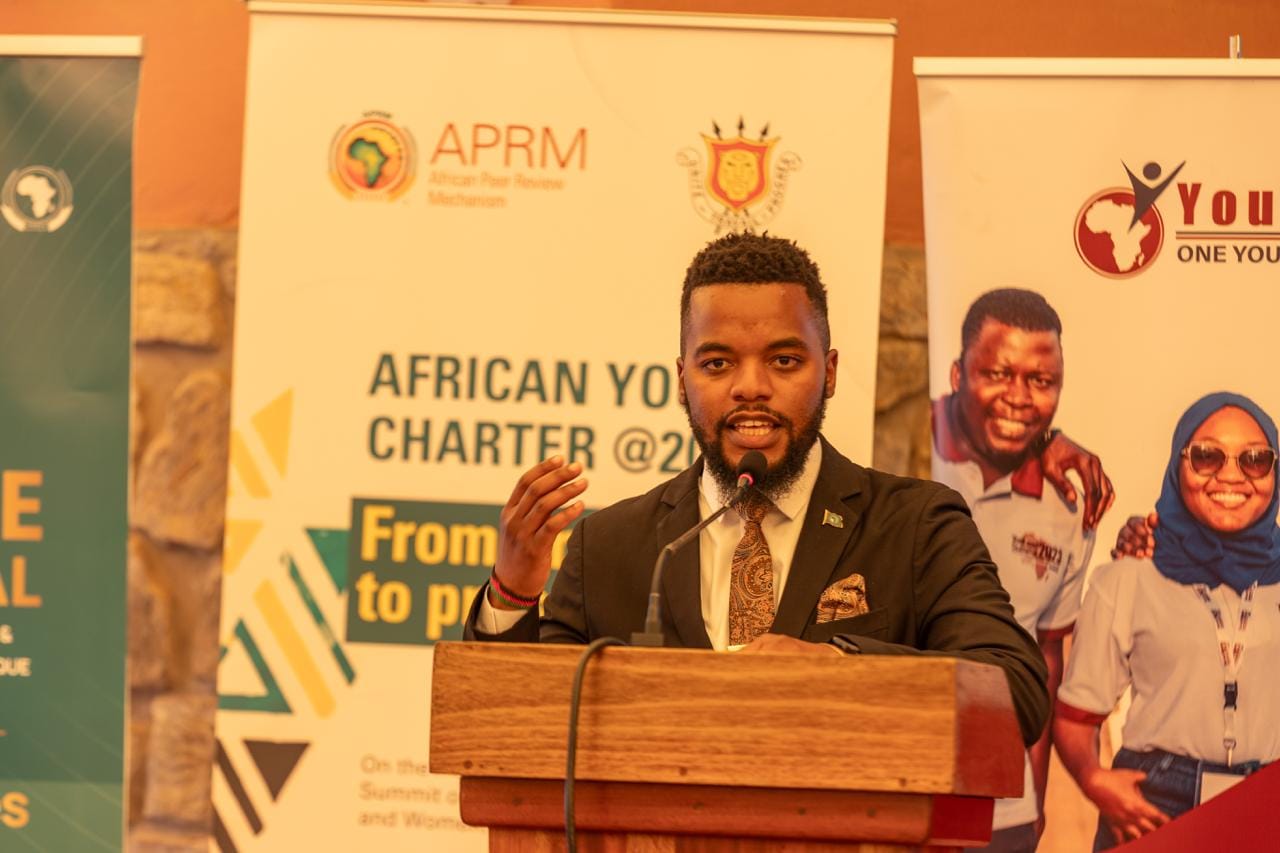
Mr.Pempho Chabvuta, Partnership and Youth Engagement Officer in the Youth Division of the African Union Commission's Women, Gender and Youth Directorate, shares his views on: On 20 years of Youth Charter
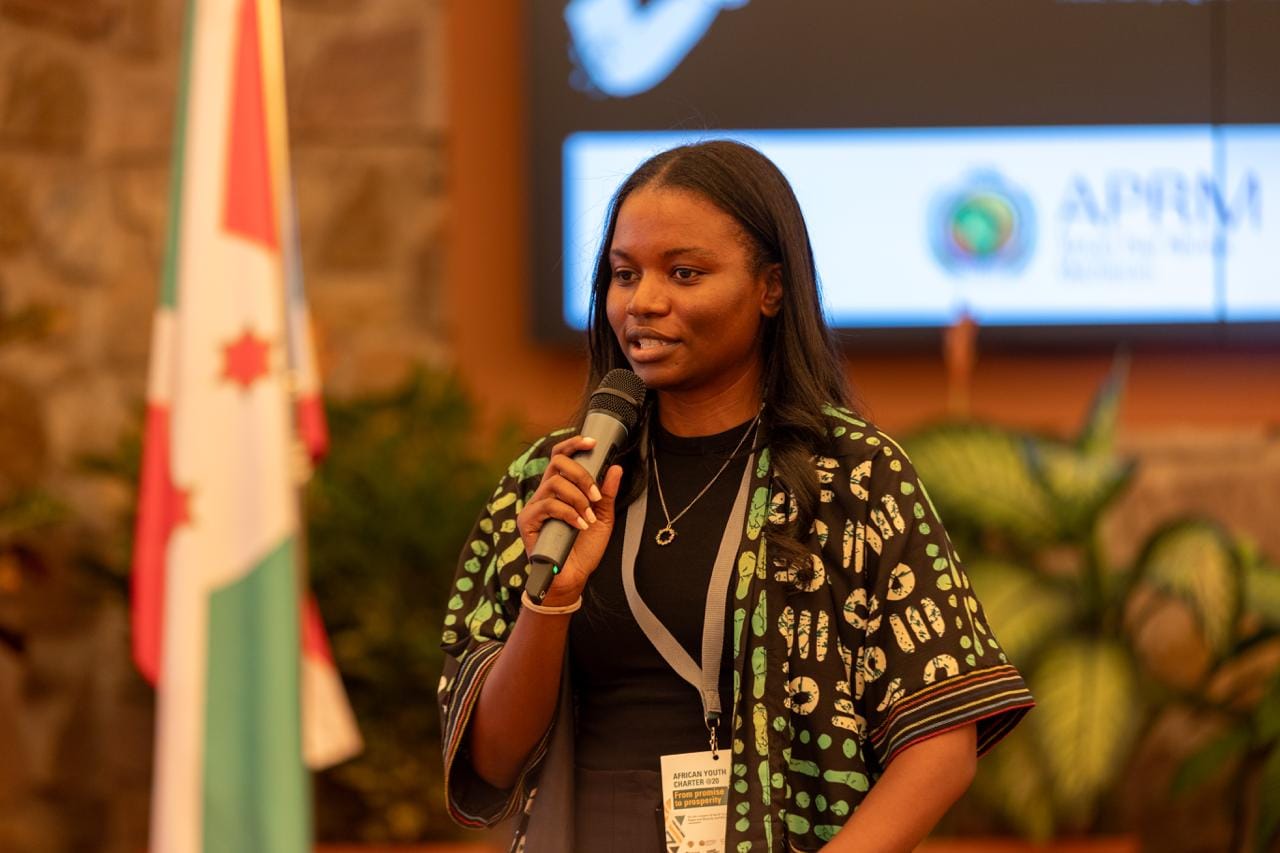
Alice Kampengele from Restless Development org. reflects on 20 years of Youth Charter
Comments
