15Aug
By Johnson Watson
Supporters cite roads, schools, and pro-poor policies as reasons to bring back the CDC ticket
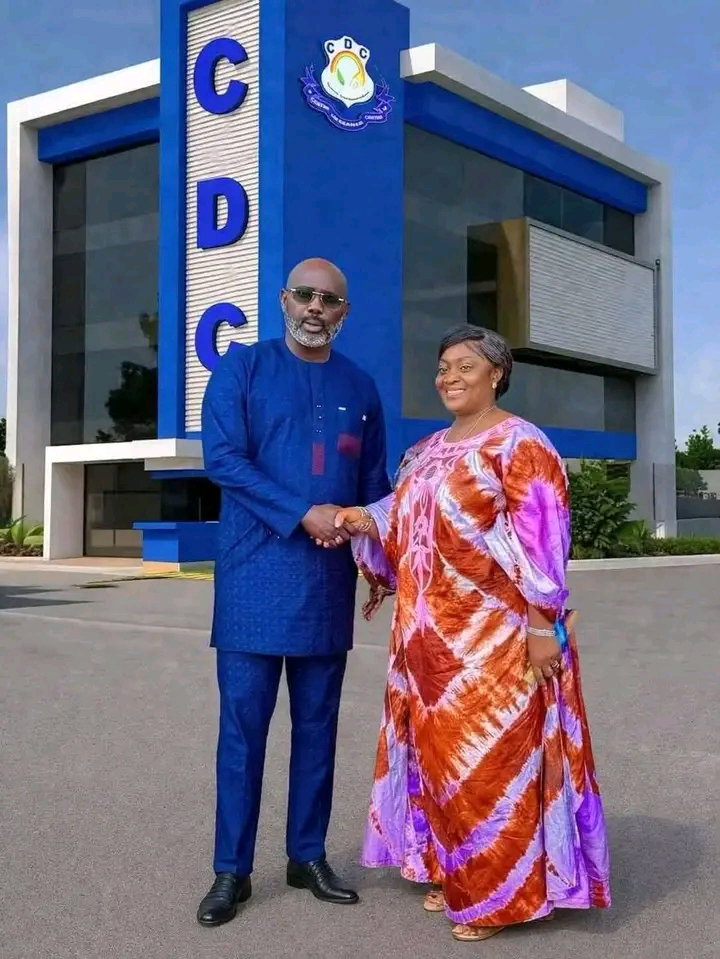
Former President George Wweah and Former Vice President Jewel-Howard Taylor, standing united at the CDC Headquartyersd
As Liberia moves past the midpoint of the current administration, political conversations in markets, campuses, and party offices are already turning to 2029.
And in those conversations, one name keeps coming up: George Weah. Next to it, another: Jewel Howard Taylor.
Across the Coalition for Democratic Change and among ordinary Liberians, the call is getting louder. Bring back the People’s Team.
WHY THE CALL IS GROWING NOW
The Weah-Taylor administration governed Liberia from 2018 to 2024 under the banner of the “Pro-Poor Agenda for Prosperity and Development.” For CDC supporters, that six-year period is the benchmark they want voters to measure in 2029.
Three areas dominate the argument:
1. Infrastructure Delivery Between 2018 and 2023, the Ministry of Public Works reported the paving and rehabilitation of over 300km of primary and secondary roads. That included major corridors like the 100km Gbarnga-Salayea road, the 45km Sanniquellie-Loguatuo road, and extensive urban roadwork in Monrovia, Buchanan, and Ganta. Supporters argue this was the most aggressive road work in any single 6-year period since 2006. For traders and transporters, the claim is simple: “Goods moved faster, and fares dropped on paved routes.”
2. Education Access The Tuition-Free Policy for all public universities and colleges, introduced in 2018, removed semester fees for more than 40,000 students at the University of Liberia, Nimba University, BWI, and other state institutions. Families saved an estimated $50 to $150 per semester. The administration also pushed the distribution of over 1 million textbooks and the hiring of more than 2,000 additional teachers to address staffing gaps in public schools. For many parents, that policy directly affected household budgets.
3. Youth Engagement With over 60% of Liberia’s population under 35, youth policy was central. Programs like the National Youth Service and investments in sports infrastructure, including the renovation of the Samuel Kanyon Doe Sports Complex, were used to connect with young voters. Weah’s global profile as Africa’s only Ballon d’Or winner was also leveraged to bring attention and partnerships to youth and sports development.
“THEY UNDERSTOOD OUR STRUGGLES”
In CDC strongholds from Red Light to Ganta, the message is consistent. It’s not just about projects. It’s about connection.
“We had problems then too. But at least our children went to school free, and we could move our goods on new roads,” said Mamie Kollie, a market seller in Paynesville. “Madam Jewel also came to us. She talked to the women.”
That grassroots link showed up in the numbers. In 2017, the Weah-Taylor ticket won the presidency with 61.5% in the runoff. In 2023, they lost by a margin of 20,567 votes out of over 1.1 million cast — 50.9% to 49.1%, according to NEC.
For CDC strategists, that narrow loss in 2023 is proof the base remains mobilized. Their argument for 2029: give voters time to compare records, and the ticket can reclaim the presidency.
VOICES FROM THE COUNTIES
The call for a comeback is not just a Monrovia conversation.
In Bong County, where VP Taylor served as Senator for 12 years, CDC youth coordinator James Kollie says the roads changed everything. “Before 2018, getting from Gbarnga to Salayea in rainy season was impossible. The pavement meant farmers could bring cassava and palm oil to market. That’s why people here are saying ‘bring them back.’”
In Maryland County, teacher Beatrice Doe points to education. “My three children graduated from UL without me paying tuition. That was $400 I kept in my house. Many parents in Harper still talk about it. We want that policy to continue.”
In Lofa County, motorcyclist union leader Moses Kamara credits the rural roads. “The Loguatuo road opened business. We carried more passengers. Fuel money reduced. The people felt it in their pockets.”
These county voices are what CDC officials say will form the backbone of the 2029 campaign: direct testimonials from people who benefited.
THE CASE FOR JEWEL HOWARD TAYLOR
As Vice President from 2018-2024 and a former Senator from Bong County, Jewel Howard Taylor was positioned as the administration’s link to rural communities and women’s groups.
She led outreach on maternal health and micro-loan initiatives for women in 12 counties. Party officials say her inclusion on a 2029 ticket would help consolidate CDC support in the southeast and among women — two voting blocs that proved decisive in the last election.
The pitch is experience plus continuity. A team that has governed before and understands the machinery of state.
THE CDC ROADMAP TO 2029
The CDC has not formally announced candidates for 2029. But the framework being discussed inside the party rests on three pillars:
1. Record vs Rhetoric: “We built what people can see and use,” a senior CDC official said. “Roads, schools, tuition relief. That’s the campaign.
2. Economic Comparison: With inflation, fuel costs, and unemployment still top concerns in 2026, CDC believes voters will do “retrospective voting" — weighing 2018-2023 against the present.3. Party Mobilization: As Liberia’s largest opposition party, the CDC maintains county structures in all 15 counties.
Reorganization and membership drives are already underway ahead of the next cycle.
Liberia’s next presidential election may seems years away. But in politics, that timeline moves fast.
The growing calls for a Weah-Taylor comeback are rooted in one idea: return to leadership that prioritized pro-poor programs and direct engagement with citizens.
For supporters in Monrovia, Bong, Maryland, Lofa and beyond, the message is simple and direct. It’s about finishing what was started
Comments
