12Aug
By Hassan Ibrahim, Mogadis
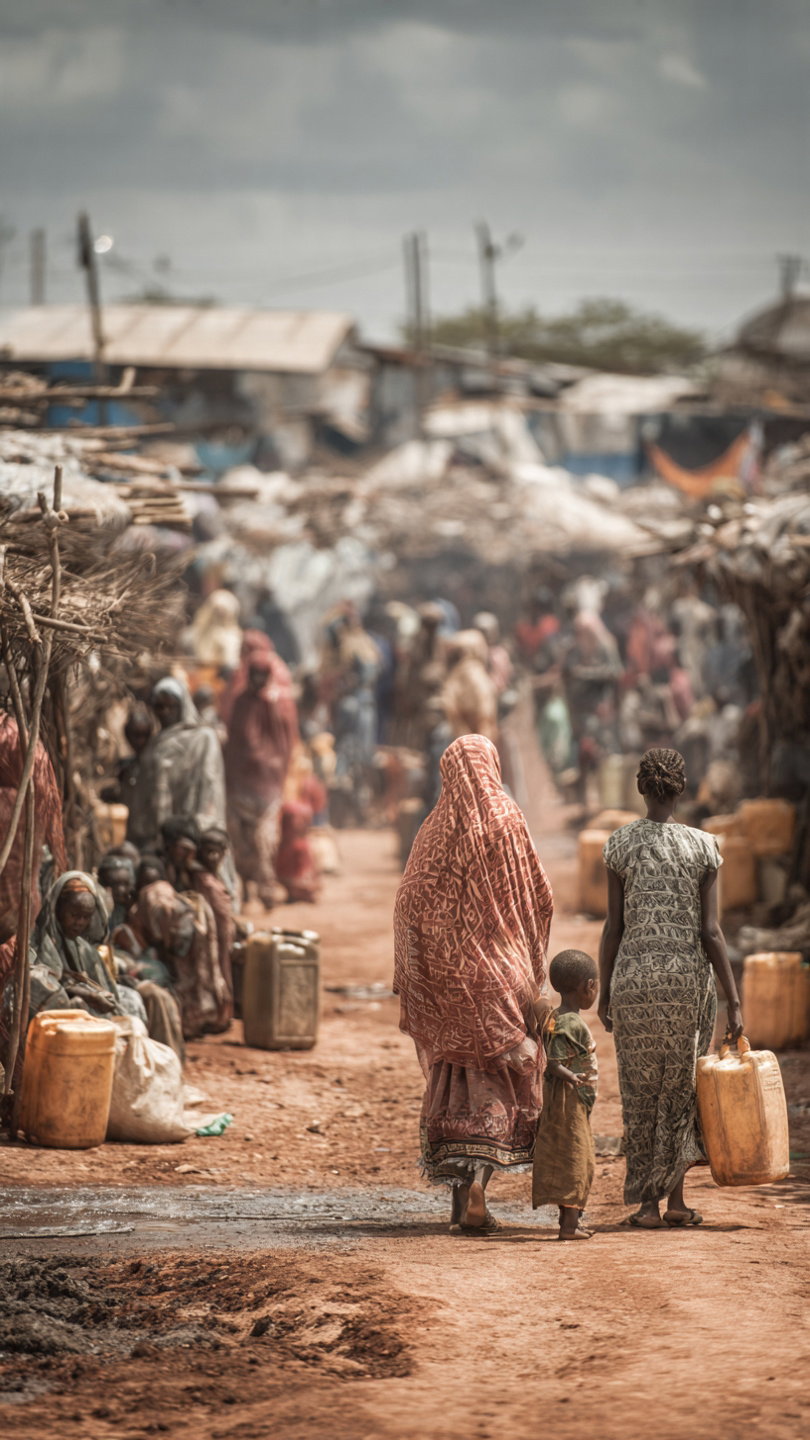
In Baidoa's IDP camp and Bakara Market, Somali families live the daily cost of political crisis - facing displacement, scarce water, and insecurity while leaders debate in Villa Somalia.
In Mogadishu, politics is discussed in air-conditioned conference rooms. In the rest of Somalia, it is lived in IDP camps, in dry riverbeds, and at checkpoints where a wrong answer can cost your life.Somalia has been in crisis for so long that the word “crisis” barely registers anymore. But beneath the headlines about parliamentary disputes, delayed elections, and federal vs member state fights, there are 17 million people trying to survive. And for them, political failure is not abstract. It is hunger. It is displacement. It is fear.A state that argues while people bleedThe political story of Somalia in the last few years has been the same script with different actors: power struggles in Villa Somalia, fallouts between the Federal Government and Federal Member States, and elections that come late, cost too much, and change very little. Clans still matter more than policy. The 4.5 power-sharing formula still decides who gets what. And the transition from AMISOM to ATMIS to the new AU mission has happened on paper, but on the ground Al-Shabaab still controls roads, collects taxes, and runs courts in many areas.For the average Somali in Baidoa, Galkayo, or Kismayo, this means one thing: there is no one clearly in charge. When the government in Mogadishu and Jubaland are fighting, services stop. When Puntland and the center disagree, aid trucks are delayed. When parliament spends months on a no-confidence vote, the budget for health clinics is frozen.The price paid in markets and homesGo to Bakara Market and ask about politics. Vendors will not talk about constitutional amendments. They will talk about prices. Because of insecurity, a bag of maize from the farms in the Shabelle Valley may never arrive. Because of political gridlock, the port fees go up and no one regulates them. Because there is no unified policy, humanitarian aid is politicized — some regions get it, others are blocked.Drought and floods come every year now. But climate is only half the story. The other half is that there is no coherent government response because ministries are understaffed, underfunded, and busy fighting for relevance. So when the rains fail, families walk. Again.The UN estimates more than 3.8 million Somalis are internally displaced. Most are women and children. They left because of Al-Shabaab, or because of clan clashes fueled by politicians arming militias, or because their farm died. In the camps around Mogadishu and Dollow, they live under plastic sheets. Their children are not in school because the district education office has no budget. Their biggest political demand is not “more autonomy.” It is water.Youth with no future, men with no optionsSomalia has one of the youngest populations in the world. More than 70% are under 30. But politics has no room for them. Parliament is still dominated by elders and clan representatives. Jobs are tied to who you know in the ministry. And when frustration grows, two paths open: migrate across the desert and sea, or join the group that is paying — sometimes Al-Shabaab.That is the quiet tragedy of the political crisis. It is not just that leaders disagree. It is that the disagreement produces a generation with no stake in the state. A young man in Beledweyne who sees his MP fly to Nairobi and come back with nothing for the district will not vote next time. He may not even believe in voting.Women carrying the weightIn every crisis, Somali women carry the most. They are the ones queuing for food aid. They are the ones negotiating with armed men to get their sons back. They are the ones running small businesses in markets that get bombed.Politically, they are told they have 30% representation. In reality, many female MPs are selected by male elders and have little power to change laws on gender-based violence, property, or access to justice. When the political elite fights, women’s issues are the first to be dropped from the agenda.Yet it is women’s groups and local peace committees who are doing the actual peacebuilding. They mediate between clans. They run schools in camps. They document abuses. The state is absent, so they fill the gap — without budget, without protection.Security and the feeling of no governmentAl-Shabaab thrives in the vacuum. Where the government cannot provide justice, they provide a court. Where the government cannot tax fairly, they tax. Where politicians are seen as corrupt, they present themselves as “clean.”The common person is caught in the middle. Support the government and you risk assassination. Don’t pay the militants and you risk punishment. Speak out and you risk both.The new offensive to retake territory has had gains. But gains mean little if there is no civilian administration to follow. A town liberated and then left with no police, no judge, no services will fall back within months. That cycle is exhausting for people who just want to farm and trade.What the people are actually asking forTalk to Somalis and the political demands are surprisingly simple. Not “federalism models” or “constitutional review.”They want:
- A government that shows up after a flood, not just for a photo.
- Police who do not extort at checkpoints.
- Schools that stay open.
- A way to take a case to court without paying a clan elder first.
- To be able to travel from Mogadishu to Jowhar without fear.These are not big asks. But they require political consensus, and that is exactly what is missing.Somalia’s political crisis is not just about who sits in Villa Somalia. It is about the distance between that house and the IDP camp 10 kilometers away.Every time leaders delay elections, fight over mandates, or boycott meetings, the cost is paid by a mother who cannot feed her children, a student who cannot sit exams, and a farmer who cannot sell his crop.The pain of the common people is this: they are governed by a politics that does not see them, until it needs their vote, their clan, or their silence.Until Somali politics moves from survival of the elite to service of the people, the cycle will continue. The guns may change hands. The presidents may change. But the suffering in the camps, the markets, and the villages will remain the same.And that is the real crisis.
Comments
