03Oct
In South Asia, where eight countries share borders, history, rivers and political complexities, journalism often remains divided by national boundaries. The SAARC Journalists Forum was created ten years ago to challenge that division — to build a professional bridge where political dialogue sometimes struggles. At the centre of that effort is Raju Lama, a journalist from Nepal and International President of the SAARC Journalists Forum, with more than two and a half decades of experience in diplomacy, international affairs and regional cooperation. Lama is not just a journalist who reports events. For him, "Journalism is not simply about reporting events," it is about giving reliable information, bringing underrepresented voices into public discussion and helping societies understand developments beyond their immediate borders. His journey from national newsrooms to regional and international platforms, including United Nations-related media programs, reflects that philosophy. Today, Lama leads one of South Asia's most active cross-border journalist networks and is also a key voice behind a larger ambition — the Intercontinental Connection of Journalists (ICJ), a platform seeking to connect journalists from South Asia, Africa and other continents. He is closely associated with the Congress of African Journalists (CAJ), seeing CAJ and ICJ not as competitors but as complementary networks with shared values of press freedom, safety and professional solidarity. Just days after chairing the International Media Summit 2026 in Jamalpur, Bihar, which brought together journalists from five countries — Nepal, India, Bhutan, Bangladesh and Sri Lanka — Lama engaged in an exclusive interview with CAJ International Magazine Editor-in-Chief, Michael Adeboboye. In this wide-ranging conversation, he speaks about his personal journey, the state of press freedom in South Asia, the evolution of SAARC Journalists Forum, the vision for ICJ, its partnership with CAJ, and the roadmap after Jamalpur. Excerpts
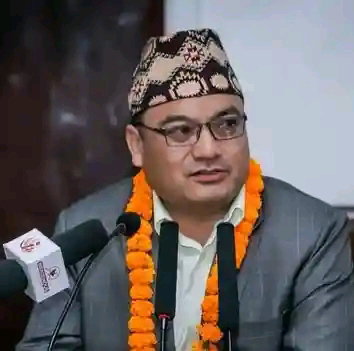
Could you please introduce yourself and share your journey into journalism?
I am Raju Lama, a journalist from Nepal and currently the International President of the SAARC Journalists Forum. I have spent more than two and half decades in journalism, working particularly in diplomacy, international affairs, regional cooperation and issues affecting South Asian societies.My journalism journey has been driven by the belief that journalism is not simply about reporting events. It is about giving people reliable information, bringing underrepresented voices into public discussion and helping societies understand developments beyond their immediate borders.Over the years, my work has taken me from national journalism to regional and international platforms. I have had opportunities to engage with journalists, diplomats, policymakers and international institutions, including through United Nations-related programs and international media activities.
What have been the most challenging and most rewarding moments in your career so far?
One of the greatest challenges is maintaining professional journalism in an environment where political pressure, economic limitations, misinformation and rapid digital changes can all affect the work of journalists. The most rewarding moments are when journalism creates understanding between communities or countries, gives visibility to an important issue, or allows a journalist's work to contribute to a wider international conversation. My involvement with regional and international journalist organizations has also been particularly rewarding because it has allowed me to work beyond national boundaries.
How do you assess the current state of press freedom and journalists' safety in South Asia? South Asia has a diverse and rapidly changing media environment. There are many courageous journalists and vibrant media organizations, but journalists also face different forms of pressure, including political influence, legal challenges, threats, online harassment, economic insecurity and, in some cases, physical risks. We should avoid treating all South Asian countries as having identical conditions. Each country has its own political, legal and media environment. At the same time, journalists across the region share many common concerns. Our objective should be to strengthen institutions that protect journalists while also emphasizing professional standards, accuracy and accountability.
What are the common challenges journalists face across SAARC countries?
The challenges vary from country to country, but several themes appear repeatedly: journalist safety, access to information, political and commercial pressure, legal uncertainty, declining traditional media revenues, misinformation, digital harassment and inadequate social and economic protection. Conflict and political instability create additional risks in some parts of the region. The response cannot simply be criticism. We need practical mechanisms for training, legal awareness, safety support, professional networking and cross-border cooperation.
Do journalists in small towns and regional languages get enough representation?
There is still a significant gap. Much international journalism is concentrated in capital cities and major metropolitan areas. However, many important stories originate in smaller towns, rural communities and border regions. Regional-language journalists are also extremely important because they often have direct access to communities that national or international media cannot easily reach. SAARC Journalists Forum wants to encourage greater participation of regional and local journalists in regional and international discussions.
How has digital media, artificial intelligence and misinformation changed journalism?
Digital media has completely transformed the speed and reach of journalism. A story can now reach millions of people within minutes. Artificial intelligence offers useful tools for research, translation, transcription, data analysis and newsroom production. But it also creates new challenges, particularly synthetic content, manipulated images, fabricated quotations and automated misinformation. Journalists must therefore become more technologically capable while strengthening traditional journalistic principles—verification, source protection, context, attribution and accountability. AI should assist journalism, not replace journalistic responsibility.
What is your view on journalists' economic security, wages and professional rights?
Economic security is directly connected with journalism's independence. A journalist who is poorly paid, insecure or dependent on political or commercial interests can face greater professional pressure. Media organizations, governments, journalist associations and international organizations should therefore discuss fair employment standards, timely payment, social protection, professional insurance and opportunities for continuing education. Journalists' rights and journalists' responsibilities must go together.
When and why was SAARC Journalists Forum established, and what is its core objective? The SAARC Journalists Forum was established ten years before with the objective of bringing journalists from South Asian countries together and strengthening professional cooperation across the region. Our basic philosophy is that journalism can create bridges even when political relations between countries become complicated. The Forum seeks to promote professional cooperation, press freedom, journalist safety, exchange of information, training and dialogue among journalists across South Asia.
How does SAARC Journalists Forum operate across different countries?
The Forum works through its international leadership, country-level representatives and networks of journalists in different South Asian countries. Because SAARC countries have different media systems and professional environments, we encourage decentralized participation while maintaining common regional objectives. The Forum is fundamentally a professional platform. Our role is to create opportunities for journalists to communicate, exchange experiences and cooperate.
Has there been any change in how the Forum operates in recent years?
Yes. Journalism itself has changed, so journalist organizations must also change. We are increasingly using digital platforms, international partnerships, online meetings, cross-border programs and professional networks. The Forum is also looking beyond traditional South Asian cooperation toward relationships with journalist organizations in Africa, Europe and other regions.
What are the major achievements of the Forum in the last few years?
One important achievement has been strengthening connections among journalists across South Asia. The Forum has participated in and organized international discussions, journalist meetings, professional exchanges and collaborations involving journalists from different countries. We have also expanded our engagement with international journalist organizations and networks. Our participation in international and UN-related media activities has provided opportunities to bring South Asian perspectives into wider discussions.
How do you coordinate among chapters in countries like Nepal, India and Bangladesh? Communication is the foundation. We maintain regular contact with representatives and journalists through meetings, digital communication and joint programs. We encourage country representatives to identify issues that are locally important while also contributing to regional initiatives. The idea is not to impose a single model on every country. It is to build cooperation while respecting each country's professional and institutional environment.
What is your vision for the Intercontinental Connection of Journalists, ICJ?
The world is interconnected, but journalists often remain organized within national or regional boundaries. My vision for ICJ is to create a professional bridge connecting journalists and journalist organizations across continents. South Asia has much to learn from Africa, Europe, Latin America and other regions, and those regions can also benefit from South Asian experiences. ICJ should become a platform for professional exchange, dialogue, training, networking and cooperation.
How do you see the partnership between SAARC Journalists Forum and ICJ?
I see the relationship as complementary. SAARC Journalists Forum provides a South Asian regional network, while ICJ can provide a broader intercontinental platform. Through cooperation, South Asian journalists can have greater opportunities to interact with colleagues from other continents, while ICJ can benefit from the experience and networks developed within South Asia.
You are also associated with CAJ. How do you differentiate CAJ and ICJ?
The Congress of African Journalists, or CAJ, has an African-focused professional and journalistic network, while ICJ is conceived as a broader intercontinental platform. They therefore have different geographic scopes. There is no reason for these platforms to compete. They can complement one another through exchanges, conferences, training and professional cooperation.
What collaboration do you expect between ICJ and CAJ?
There are many possible areas: journalist exchanges, professional training, digital journalism programs, safety initiatives, international conferences and discussions on emerging technologies .Africa and South Asia both have large and diverse media communities, so direct professional exchange could be particularly valuable.
Do you plan to create a joint mechanism for press freedom and journalists' safety?
This is an area that deserves serious consideration. An international mechanism could potentially help document concerns, share safety information, provide professional resources and connect journalists with relevant organizations. However, such a mechanism must be professionally credible, transparent and independent. It should complement existing journalist-safety organizations rather than unnecessarily duplicate them.
How can ICJ connect South Asian journalists with Africa, Europe and Latin America?
The most practical approach is through structured exchanges. We can organize international journalist conferences, virtual newsroom discussions, fellowships, training programs, joint reporting projects and regional-to-regional delegations. Digital platforms make this much easier than it was in the past.
Why was Jamalpur, Bihar chosen for the International Media Summit 2026?
Holding an international media gathering outside a major metropolitan capital can itself be meaningful. Jamalpur provided an opportunity to bring international journalists into a regional setting and demonstrate that important conversations about journalism do not need to be restricted to major media centers. The summit also provided a platform for journalists from South Asia to meet directly and exchange experiences.
What were the main objectives of the summit?
The principal objectives were professional dialogue, regional cooperation, discussion of challenges facing journalists and strengthening relationships among journalist organizations. An important part of the summit was creating direct communication among journalists from different countries.
What were the key discussions and resolutions?
The discussions focused on strengthening journalist cooperation, professional networking, press freedom, journalist safety, new media and international collaboration. The important point is that a summit should not end when participants return home. Its value depends on follow-up activities, professional exchanges and implementation of agreed initiatives.
How important was participation from five countries?
Participation from Nepal, India, Bhutan, Bangladesh and Sri Lanka demonstrated the regional character of the initiative. South Asia is culturally diverse, and journalists from different countries experience different media environments. Bringing them together creates opportunities to learn directly from one another. What message did the presence of chief guest Dr. Bhim Singh, Rajya Sabha MP, and MLA Pranav Kumar give to the media community?
Their participation demonstrated the importance of dialogue between elected representatives and the media community. Politicians and journalists have different professional responsibilities, but both are important participants in democratic public life. Direct dialogue can help both sides better understand the concerns and expectations of the other. What feedback did you receive from participants?
Participants generally emphasized the value of meeting colleagues directly, developing professional relationships and creating opportunities for continued cooperation. For me, one of the most important outcomes was the sense that journalists from neighboring countries want more regular opportunities for professional exchange.
Will this summit become a regular feature?
There is value in continuing such initiatives, but future editions should be developed through consultation with participating organizations and journalists. The location of a future summit can be determined according to the objectives, participation and organizational arrangements. The important principle is continuity rather than simply holding a single event.
What follow-up actions will the Forum and ICJ take after Jamalpur?
We should convert the relationships created at Jamalpur into practical cooperation. Possible follow-up areas include journalist exchanges, online discussions, training programs, joint international conferences and stronger communication among national journalist organizations. The Forum and ICJ should also maintain contact with participants so that the summit becomes the beginning of longer-term cooperation.
What is your roadmap for SAARC Journalists Forum and ICJ over the next two years?
For the SAARC Journalists Forum, our priorities are to strengthen national networks, increase opportunities for young journalists, develop professional training and expand regional and international cooperation. For ICJ, the priority is to establish a credible intercontinental professional network connecting journalists and journalist organizations. Over the next two years, I would like to see more journalist exchanges, international conferences, digital training, cooperation on journalist safety and greater participation of young journalists.
How can young and upcoming journalists get involved?
Young journalists should participate actively in professional organizations, attend training programs, develop international contacts and learn new technologies. They should also understand that journalism is more than social-media activity. Good journalism requires verification, persistence, ethics and accountability. We want young journalists to become participants in international journalism networks, not merely observers.
Finally, what is your message to journalists across South Asia and colleagues in ICJ and CAJ networks worldwide?
My message is simple: journalism must continue to build bridges. South Asia has enormous diversity, but journalists across the region share many professional challenges and responsibilities. We should cooperate while respecting our differences. To journalists everywhere, I would say: protect the credibility of your profession. Verify before publishing, give a voice to people who are often unheard, respect professional ethics and stand together when journalists face legitimate threats to their safety and professional independence. The future of journalism will be shaped not only by technology but also by the integrity of journalists. As International President of the SAARC Journalists Forum, my commitment is to strengthen cooperation among journalists in South Asia and to build meaningful connections with colleagues around the world through platforms such as ICJ and our wider international journalist networks. Journalism has no border when its purpose is truth, public interest and understanding.
Comments
