CAJ Intl Mag
47 min read
0 Comments
26 min read
0 Comments
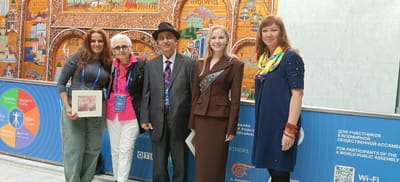
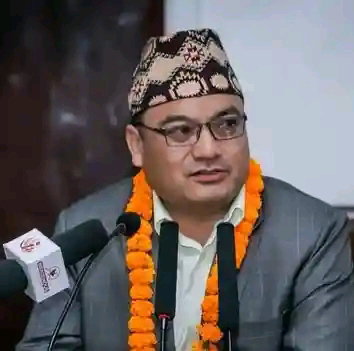
SAARC Journalists Forum President Raju Lama: South Asian Journalists Must Unite for Rights and Safety SAARC Journalists Forum President Raju Lama Interview: Dialogue and Cooperation for South Asian Press Freedom SAARC Journalists Forum President Raju Lama at International Media Summit 2026 Jamalpur calls for South Asian journalists unity on rights, safety and press freedom. coverage of Raju Lama, President of SAARC Journalists Forum International / SAACR, at International Media Summit 2026 Jamalpur, Bihar, India. Attended by Dr. Bhim Singh MP, organized by All India Journalists Union AIJU. Journalists from Nepal, India, Bhutan, Bangladesh, Sri Lanka discuss cross-border challenges: low wages, safety risks, political pressure, digital shift. Lama stresses cooperation beyond news exchange to journalists' rights, professional safety, and SAARC media dialogue. Raju Lama, SAARC Journalists Forum, SAACR President, International Media Summit 2026, Jamalpur Bihar Media Summit, South Asian Journalism, AIJU, SAARC press freedom, All India Journalists Union, South Asian journalists safety
Read More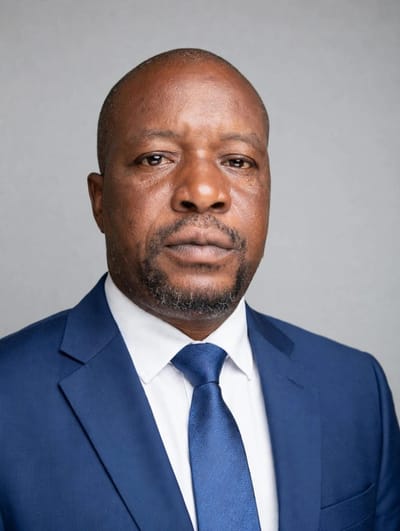
15 min read
0 Comments
CAJ President Michael Adeboboye: Why CAJ is the Hub and ICJ is a Strategic Door - Exclusive Interview CAJ President Adeboboye: CAJ is the Hub, ICJ is a Powerful Door for African Journalists | Exclusive Interview CAJ President Michael Adeboboye reveals why CAJ partnered with ICJ, how CAJ remains the hub for African journalists, and the Musketeers of Truth doctrine. Exclusive interview with Michael Adeboboye, International President of Congress of African Journalists (CAJ). He explains CAJ's global expansion strategy, why CAJ remains the home and ICJ is a strategic partner, the 9 pillars of CAJ-ICJ partnership, verifiable global press card, publishing and marketplace for African exclusives, and One for All, All for One doctrine. Michael Adeboboye, CAJ President interview, Congress of African Journalists, CAJ ICJ partnership, CAJ global strategy, African journalists press card, Musketeers of Truth, CAJ International Magazine interview EXCLUSIVE: CAJ President Adeboboye - CAJ is the Hub, ICJ is One Powerful Door We Opened CAJ, Michael Adeboboye, CAJ Interview, ICJ Partnership, African Journalism, Press Card
Read More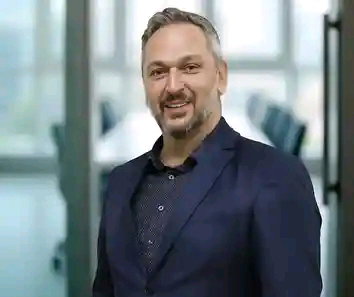
40 min read
0 Comments
ICJ Founder Saša Dobrijević: We Are Building a New Global Infrastructure for Journalism ICJ Founder Saša Dobrijević Interview: Why I Built a Media Company, Not Another Association ICJ Founder Saša Dobrijević explains why he registered ICJ Global Media Group LLC in the USA, verified US press card, marketplace for exclusives, and CAJ alliance. Exclusive interview with Saša Dobrijević, Founder & CEO of Intercontinental Connection of Journalists (ICJ) Global Media Group LLC, USA. He reveals why he left IFJ/USPA legacy bodies, how ICJ's self-sustaining model works through memberships and institutional reports, US-registered press card for freelancers, publishing home for foundation-funded journalists, exclusive story marketplace, free training, JTI transparency, IT verification against AI disinformation by Nenad Veljkovic, and historic partnership with CAJ and SAARC Journalist Forum. Saša Dobrijević, ICJ Founder interview, ICJ Global Media Group LLC, Intercontinental Connection of Journalists, US press card, journalism marketplace, freelance journalism publishing, ICJ CAJ partnership, self-sustaining journalism model WE ARE BUILDING A NEW GLOBAL INFRASTRUCTURE: ICJ Founder Saša Dobrijević Exclusive ICJ, Saša Dobrijević, ICJ Founder, Global Journalism Infrastructure, Press Card, ICJ Marketplace
Read More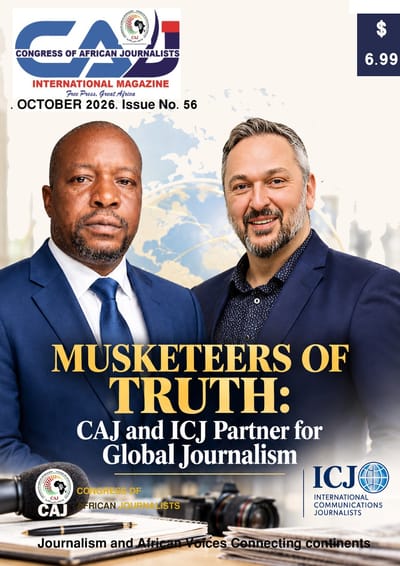
32 min read
0 Comments
"CAJ, Congress of African Journalists, ICJ, Intercontinental Connection of Journalists, SAACR, Global Journalism Partnership, Musketeers of the Truth, Press Freedom Africa, African Journalism, International Journalism Alliance, CAJ International Magazine, Journalism Ethics
Read More
175 min read
0 Comments
The Federal Government of Nigeria is running a ₦49.7 trillion budget. On the streets, Nigerians are running another one. It is not in the appropriation bill. It has no line item in FAAC. It is funded by tithes, offerings, zakat, sadaqah, and volunteer time. It is administered from altars, minbars, and church food banks. Economists call it civil society. Religious people call it faith. Food inflation hit 20.31% in July 2026. Rice, garri, onions, and transport have pushed millions to the edge. Government palliatives are slow. But on Sunday, the offering basket is going to welfare. On Friday, the zakat committee is buying bags of rice. On Wednesday, a bishop is paying hospital bills. “Our problems in the country are self-inflicted,” says Cardinal John Onaiyekan in February 2026. “When the nation is bleeding, you cannot expect a polite meeting with the Head of State.” “Religious differences shouldn't divide us,” says Sheikh Abdullahi Bala Lau in August 2026. “Muslims and Christians have equal stakes in Nigeria.” From Abuja to Ekiti, from Ota to Kano, churches, mosques, and African Indigenous Churches have become the last safety net. This is our cover story “Budget of Faith” in 2026 and how religion is feeding the nation while the state tries to find its balance. Michael Adeboboye, CAJ International Magazine Editor-in-Chief writes.
Read More
49 min read
0 Comments

8 min read
0 Comments
In Phalombe district, southern Malawi, 27-year-old farmer Stanley Banda hears a lot about “rare earth minerals” and “millions of dollars” on the radio. What he has not heard is how any of it will reach his village. Banda lives above the Songwe Hill Rare Earth Project, a 20-square-kilometer deposit being developed by UK-listed Mkango Resources. With global demand for rare earths projected to triple by 2035, the mine is being billed as one of Malawi’s most promising investments. The government projects 1,200 direct jobs, 10,000 indirect jobs, and $120.6 million annually in taxes and royalties for one of the world’s poorest countries. Yet three years after the Environmental Impact Assessment was approved, many in Phalombe say they still do not understand the project. Key documents are in English, consultations were limited, and questions about land, compensation, and health risks remain unanswered. As the world races to secure minerals for electric vehicles and wind turbines, Songwe Hill has become a test case: can Malawi’s green transition deliver development to the people who live on top of the minerals, or will it repeat the extractive patterns of the past?
Read More
7 min read
0 Comments
60-Word Intro: Fourteen days after Zambia’s presidential election, Tonse Alliance leaders Brian Mundubile and Makebi Zulu are in police custody. The Zambia Police Service confirmed on August 27, 2026, that warn and caution statements were recorded over alleged treason under Section 43(1) of the Penal Code. No details of the allegations have been released as investigations continue
Read More
13 min read
0 Comments
When President Joseph Nyuma Boakai stood before the nation in mid-2026, Liberia was reeling. In the span of five weeks, security forces had intercepted two of the largest cocaine shipments in the country’s history: 238 kilograms hidden in seasoning-cube cargo at Roberts International Airport in June, and nearly four metric tons worth an estimated $300 million in Duazon in July. The scale of the seizures forced the government into crisis mode. Boakai’s response was swift and public. He told Liberians there would be “no selective justice, political protection, sacred cows.” Within days, his administration dismissed and suspended more than a dozen officials. The list included senior figures at Roberts International Airport, a police commissioner overseeing criminal investigations and Interpol liaison work, and a deputy director at the National Security Agency. Two police officers were also fired over allegations they used government vehicles to move narcotics across Bomi Highway. In a move that signaled the dragnet would reach the highest levels, authorities arrested and charged former Vice President Jewel Howard-Taylor with unlicensed importation, solicitation, and conspiracy. The administration insisted the case was “strictly a matter of law enforcement” and not political retaliation. But 132 days later, the promise of equal accountability is being tested in the court of public opinion. On talk radio in Monrovia, in newspaper columns, and across social media, one question keeps resurfacing: is justice being applied to everyone, or only to some? The answer depends on where you look. What is verified is clear. The drug busts happened. The dismissals happened. The arrest and prosecution of a former vice president happened. What is disputed is the process that follows. The president’s own household has not escaped scrutiny. In late July, a viral video sought to link Boakai’s son, Joseph Boakai Jr., to an alleged cartel. He denied the claims and invited investigators to present evidence. Government officials have also rejected any link between the president’s son and the seizures. Yet there has been no arrest, no charge, and no independent report clearing him. For critics, “denial is not investigation,” and the absence of visible due process fuels the perception of a double standard. Civil society has been the loudest voice pushing for more. The Women NGOs Secretariat of Liberia, WONGOSOL, praised the dismissals but warned that “administrative removals alone will not upend the criminal networks threatening Liberia’s security.” Executive Director Esther S. Davis Yango said the firings must be the beginning, not the end, and called for full prosecutions. As of August 2026, charge sheets and court dockets for most of the dismissed airport, NSA, and LNP officials have not been made public. The same credibility gap extends to legacy cases. In his first cabinet meeting of 2026, Boakai ordered investigations into “mysterious deaths, including the missing boys and the deaths of auditors.” Six months on, there have been few updates and no indictments. Supporters say Boakai has done more than any recent government to confront drug trafficking and hold powerful people to account. Critics say personnel changes are being confused with justice, and that without transparent prosecutions and independent oversight, the “no sacred cows” pledge remains a slogan, not a reality. As Liberia enters the next 90 days, the administration faces a choice: release the evidence of equal justice in courtrooms, or continue to make it in press conferences.
Read More
12 min read
0 Comments
For 132 days, SJF President Raju Lama took South Asian journalism to the UN, Washington, and global newsrooms. The result: a new 3-year pact with ICJ and the start of direct talks with African journalists. From Kathmandu to the world — a South-South media alliance is forming
Read More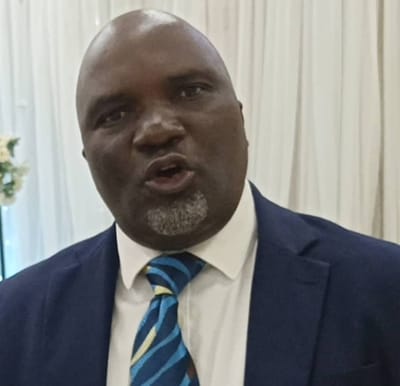
6 min read
0 Comments
*Intro:* Days after President Hakainde Hichilema was declared winner of Zambia’s August 13, 2026 general elections, BuyZed Campaign Founder Ambassador Evans Kazonga Ng’oma has urged Zambians to move past politics and focus on nation-building. Speaking from Lundazi, Ng’oma called on government to govern for all citizens, the opposition to remain responsible, and the country to reject violence, militancy, and misinformation. His message: “Political competition is temporary. Zambia is permanent.”
Read More