03Oct
In an era when African journalism is squeezed by economic hardship, safety threats and AI-driven disinformation, the Congress of African Journalists is choosing global expansion over isolation. For decades, Africa has produced some of the world's bravest reporters — covering elections under internet shutdowns, investigating illicit flows with a smartphone, keeping community radio alive — yet those same journalists remain the least recognized, least protected and least paid. Under International President Michael Adeboboye, CAJ, representing journalists across the continent and diaspora, is fixing the infrastructure, not lamenting the problem. It is building global platforms that offer what African journalists have never had at scale: a verifiable press card, a credible publishing home under a U.S.-registered company, and a marketplace for exclusives. Dela Ahiawor, CAJ International Magazine West Africa Bureau Editor writes that: CAJ strategic partner in the push is ICJ Global Media Group LLC, a U.S.-registered firm founded by Saša Dobrijević to provide real infrastructure for journalists who have lost jobs, credentials and platforms.

Dobrijević:ICJ Founder
when African journalism is being squeezed from three directions at once — economic hardship, physical insecurity, and a tidal wave of AI-driven disinformation — the Congress of African Journalists has made a counter-intuitive choice. Instead of retreating into continental advocacy, it is expanding globally.
For decades, the story of African journalism has lived with a painful paradox. The continent produces some of the bravest reporters in the world. They cover elections under total internet shutdowns. They track illicit financial flows from Lagos to Dubai with nothing more than a smartphone and a contact. They keep community radio alive in 50 local languages. Yet those same journalists remain the least recognized, least protected, and least paid in the global media value chain.
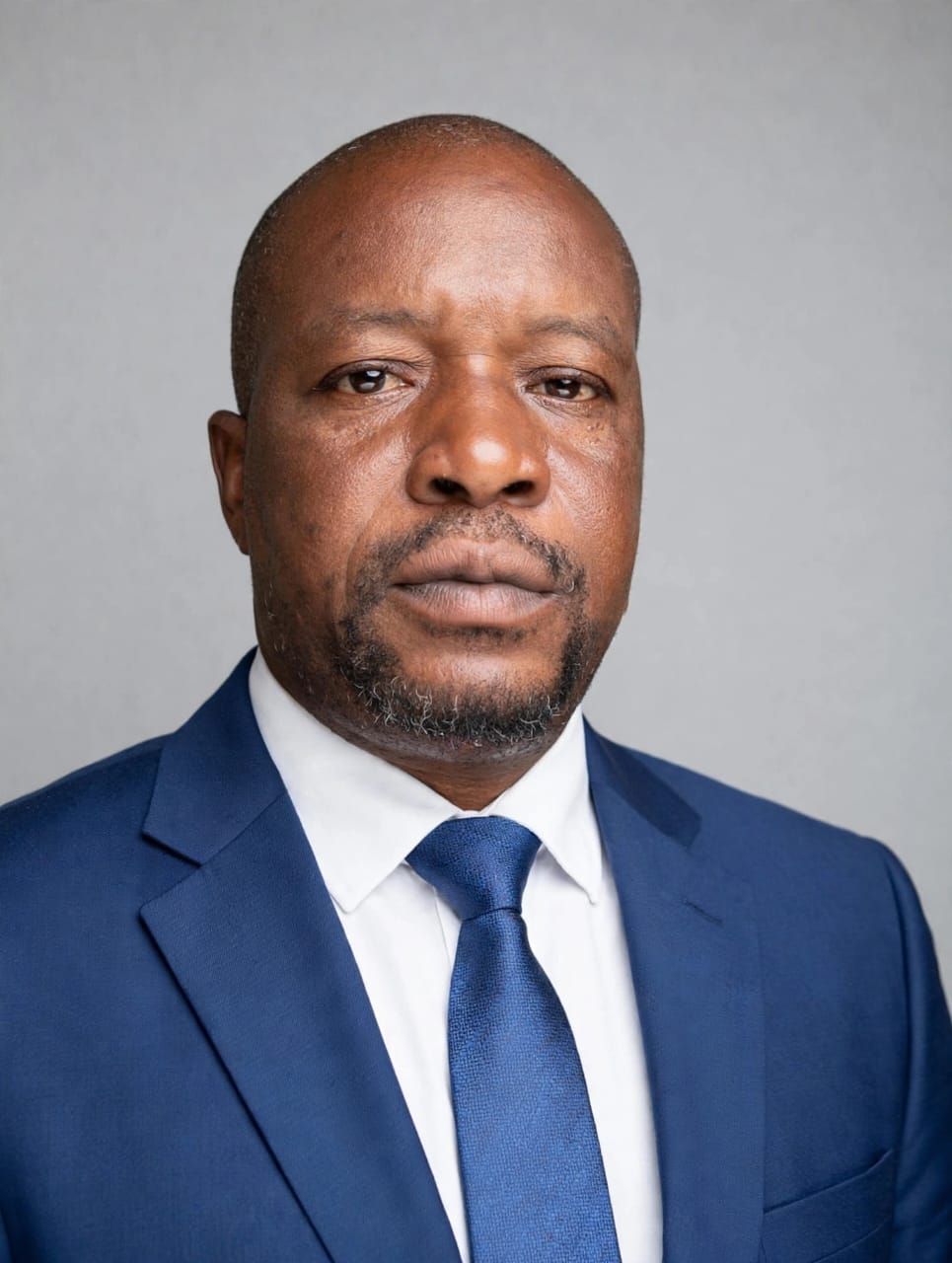
Adeboboye: CAJ International President
Under International President Michael Adeboboye, the Congress of African Journalists, which represents journalists across all regions of Africa and the diaspora, has decided to stop lamenting that paradox and start fixing its infrastructure. The result is a bold worldwide connection strategy: building multiple global platforms that give African journalists what they have never had at scale — a verifiable press credential that works across borders, a credible publishing home under a U.S.-registered media company, and a marketplace where an exclusive from Maiduguri, Goma, or Blantyre can be priced and sold fairly.

Professor Doctor Cristina Vaz De Almeida: President of SPLS
One of the strategic pillars in that expansion is the Intercontinental Connection of Journalists, ICJ Global Media Group LLC, a U.S.-registered media company founded to provide real infrastructure for journalists who have lost jobs, credentials, and platforms. In this double exclusive, CAJ International Magazine presents two rare conversations: the Founder of ICJ on why he built a self-sustaining company rather than another association, and President Adeboboye on why CAJ remains the hub, with ICJ as one powerful door. Together, they outline a new doctrine: One for All, All for One — with CAJ projecting African voices louder onto the world stage.
To appreciate the significance of CAJ’s pivot, it helps to understand the three interlocking crises that define the daily reality of African reporters. The first is recognition: across much of the continent, a press card issued by a local union or even a national media house carries little weight outside its borders. At an African Union summit in Addis Ababa, at a United Nations briefing in Geneva, at a border post between Cameroon and Chad, or at a political rally in Abuja, that credential is often questioned, ignored, or dismissed outright. Freelancers bear the heaviest cost. An estimated seventy percent of working journalists in Africa today are freelancers, stringers, or independent contributors with no full-time newsroom behind them. When they lose a contract, they lose not just income but access and identity.

According to the Founder of ICJ, this erasure has become systemic. Massive job losses across media globally have silenced voices, stripped reporters of credentials, and left them without any platform to publish. His assessment aligns with CAJ’s own monitoring, which indicates that in the last eighteen months alone, more than 120 journalists have been arbitrarily detained on the continent and over 15 killed. Internet shutdowns during elections have become a normalized tool of censorship. But beyond physical danger, there is a quieter, bureaucratic disappearance: without a verifiable credential, a journalist cannot enter the room where decisions are made.
The second crisis is a home for publication: a young investigative reporter in Maiduguri, in eastern Democratic Republic of Congo, or in northern Mozambique may spend months documenting security, humanitarian, or corruption-related abuses. That work may even be supported by a foundation grant. But when the investigation is complete, where does it safely land? Many local outlets fear legal retaliation. Many international outlets will not publish without a U.S. or European legal umbrella and libel protection. The ICJ Founder describes this as a growing global problem, but one that is existential in Africa. Foundation-funded journalism is expanding while publishing infrastructure is contracting. Newsrooms are closing as advertising revenue migrates to technology platforms. The result is a generation of African journalists with stories but no safe, credible home.

The third crisis is economic: for decades, the value of an African exclusive has been determined not by its journalistic merit but by the weakness of its seller. A reporter who risks his life to expose illicit financial flows from Nigeria to London often ends up selling that story for $100, or giving it away for exposure, because there is no secure marketplace to price it as an international exclusive. Audiences, the ICJ Founder argues, are tired of copy-paste information. They are hungry for sincere, original testimony from the ground. His model aims to reverse that dynamic, allowing members to produce stronger, original, exclusive stories and place them through ICJ, where large media houses seeking originality can license an exclusive that no one else will publish.
For President Adeboboye, this economic strangulation is the wound no one likes to discuss publicly. His framing is blunt and personal. He asks how society can tell a young journalist earning $80 a month to refuse a $500 brown envelope, or to pursue a three-month investigation when he cannot afford mobile data. In his view, the biggest threat to journalism in Africa is not just censorship, but poverty. Resilience without resources, he often says, is simply suffering.
These three deficits — lack of legal recognition, lack of a publishing home, and lack of a fair marketplace — form what CAJ now calls the triangle strangling African journalism. Previous responses have been largely rhetorical: statements, communiques, and ceremonial memoranda of understanding. Adeboboye dud not exempt CAJ from that criticism. In conversation, he openly admitted that CAJ itself had signed MoUs in the past that ended up as mere photo opportunities. He made no attempt to defend that history, noting that “Africans are tired of ceremonies.” Under his presidency, the shift has been deliberate — from association to infrastructure. Instead of begging for a seat at someone else’s table, CAJ is building its own global tables and inviting partners to join. The partnership with ICJ Global Media Group LLC, a U.S.-registered company that is listed on government tender portals worldwide and has built a self-sustaining model through memberships and through the provision of political analysis, diplomatic reports, and economic reports for governments, banks, and embassies, represents one pillar of that new architecture.
Yet Adeboboye is careful to define the hierarchy. CAJ, he emphasized, “is the hub.” It is today a body with global networks, with members in several African countries and strong diaspora representation. His mandate as International President is to build worldwide connections that put African journalism on the global map. ICJ has not absorbed CAJ; CAJ has strategically partnered with ICJ as one of many platforms under its global expansion. CAJ remains the home. ICJ is a powerful door that has been opened.
With CAJ’s model, a journalist in Cameroon with a powerful exclusive no longer needs to chase a foreign editor in London or New York. The pathway runs through CAJ. The organization verifies the material, provides legal review, and gives the journalist access to worldwide platforms — CAJ International Magazine, http://www.cajintl.org, and strategic partners like ICJ which provide a U.S. legal umbrella, global distribution, and a marketplace. As Adeboboye summarized the logic: the journalist earns, CAJ protects, and Africa’s voice is heard.
The timing is critical. In November 2026, Nairobi will host the Global Press Peace Summit, where the Nairobi Declaration on the protection of journalists will be presented. ICJ is also preparing its own ICJ Declaration pushing for Press Authority status — a formal legal status and biometric badges for journalists equivalent to official persons on the ground. In the month of September, the disappearance of investigative journalist Micah Reddy and his fixer Kooki Mahmoud in Djibouti has underscored why legal status, verifiable credentials, and global rapid response mechanisms are not theoretical debates. They are matters of life and death. Adeboboye pointef out that “if a journalist is detained in Cameroon, CAJ’s approach is no longer to issue a statement from Nigeria alone, but to activate all its worldwide connections — including ICJ — to amplify that case simultaneously in Washington, Brussels, Geneva, and New York”. INSIDE ICJ: WHY A COMPANY, NOT AN ASSOCIATION If journalist associations have failed to solve the three crises, what will succeed? For the Founder of the Intercontinental Connection of Journalists, the answer is not another association. It is a company. The distinction, he argues, is sustainability. While most international journalist organizations spend every December begging donors for next year’s budget, ICJ was designed from day one to be self-sustaining. Memberships provide one revenue stream, but the core of the model is a professional team that includes diplomats, political analysts, and economic experts offering high-value services — diplomatic reports, crisis PR, political and economic analysis — to governments, institutions, banks, embassies, and media houses.
That business model, he explains, is dual-track. On one side, affordable global memberships for journalists, students, and media organizations. On the other, premium services for institutional clients. ICJ Global Media Group LLC is registered on government tender portals around the world that procure exactly what it offers, creating a financial engine that then funds journalism. Earnings from institutional work, he says, allow ICJ to commission and pay its own members for special stories. Everything, by design, is built to serve journalists.
The choice of the United States was pragmatic. As a Serbian citizen with the right to register a company there, the Founder evaluated the visibility, business treatment, and legal credibility that an American entity provides. The decision, he notes, was made to maximize global reach and legal protection for members. That legal standing underpins ICJ’s most immediate product: the verified digital press card. In a world where access depends on institutional affiliation, the ICJ credential is intended to be a legal document issued by a recognized media company, enabling journalists who have lost jobs or never had a newsroom to regain access to events. The card carries the American flag, company markings, and the Founder’s signature, and, he argues, must open more doors precisely because it comes from a U.S. company. ICJ is also pushing what it calls the ICJ Declaration — a call for the United Nations to grant journalists legal recognition and biometric badges equivalent to official persons. While he acknowledges that such change requires a longer timeline, the direction is set for next year.
Beyond credentials, ICJ’s second pillar is publishing. The platform provides a place and credibility for freelancers and foundation grantees who otherwise have nowhere to publish under legal protection. Under ICJ’s model, a member can publish an original, verified story under ICJ’s umbrella. That publication is then entered into a digital library being built by the organization, so that faculties, researchers, and future journalists can reference it.
Until now, he observes, the ecosystem has been unnaturally segmented: students could only publish in university media, while professionals published elsewhere. ICJ allows journalism students to finally publish side by side with the most experienced professionals in the world, immediately building their biography and career.
The third pillar is monetization. For ICJ, the marketplace is the most critical innovation. The current information environment is saturated with copy-paste content, while audiences crave sincere and real testimonies. Members can prepare stronger, original, and exclusive stories to place through ICJ, where large media houses looking for originality can purchase an exclusive that no one else will publish. Several models for how journalists can earn money are being developed separately, but the marketplace remains central.
Credibility, however, is non-negotiable. ICJ has received a JTI Transparency report from Reporters Without Borders and has built a vetting system that every member must pass through. A special platform to manage all operational needs is currently under development, along with verification tools to counter AI and disinformation, led by top IT expert NenadVeljkovic. Education is the next rollout. The plan includes interactive panels and video calls where every journalist can actively participate in discussions and exchange experiences. Journalism students, he emphasizes, will finally have the opportunity to publish alongside global professionals.
When asked whether ICJ is already successful, the Founder points to early signals: the first panel featuring journalists from Senegal, the influx of members who previously had no press card and are now able to attend events. That, for him, is already a measure of success. Already, ICJ has signed memoranda with the SAARC Journalist Forum in Asia, the UNESCO MIL Alliance on media literacy, the Sociedade Portuguesa de LiteraciaemSaude in Portugal, the Hunnic Matinecock Tribal Nation in the USA, and is a signatory to the Jena Declaration of UNESCO. Now, CAJ joins that list. His direct appeal to journalists reading this is to join the Founding 100 initiative and become members immediately. THE NINE PILLARS: FROM PRINCIPLE TO PRODUCT The CAJ-ICJ partnership is built on nine pillars that both organizations describe as a toolbox, not a slogan. The first pillar is empowering all journalists and press freedom globally. ICJ positions itself as a completely independent media house, and its Founder sees that independence as its greatest advantage. Second is advancing Press Authority status through the ICJ Declaration. For CAJ, this objective aligns with its continental fight for journalist safety and legal recognition. The third is providing a credible home for freelancers and foundation grantees. With English as the main working language, ICJ offers professional visibility across the world.
The fourth is a unique marketplace for exclusive stories and leaks. For Adeboboye, this is the top priority of his presidency. Ending the exploitation of African exclusives is central to CAJ’s strategy. Fifth is verified digital press cards for global recognition. The ICJ card is designed to be a legal, verifiable document that restores access. The sixth is free advanced education, seminars, and training programs. CAJ’s objective, Adeboboye explains, is to make African journalists leaders in information integrity, not victims of disinformation. Seventh is global networking, cross-border projects, and joint investigations.
The eighth is professional interactive panels and annual journalism awards that create visibility and peer learning. And the ninth is amplifying civil society through the ICJ Friends initiative. Under this model, CAJ has received its own account and profile on the ICJ platform in the Friends sector, extending its reach beyond journalism into civil society partnerships. Together, these pillars shift the conversation from declarations to deliverables. CAJ AS GLOBAL HUB: BUILDING TABLES, NOT BEGGING FOR SEATS Perhaps the most important clarification in this entire partnership is one Adeboboye returns to repeatedly: CAJ did not join ICJ. CAJ partnered with ICJ as one of many platforms under CAJ’s global expansion strategy. CAJ remains the home. He describes CAJ today as a body with global networks, members in several African countries, and diaspora representation. His mandate as International President is to build worldwide connections that put African journalism on the global map. The Intercontinental Connection of Journalists, as a U.S.-registered media company with global infrastructure, is one of those platforms.
In practical terms, the workflow is straightforward. A journalist in Zimbabwe with a major exclusive on security or humanitarian issues, but no credible international platform willing to publish it, no longer needs to struggle alone. Through CAJ, that journalist gains access to multiple worldwide platforms. CAJ verifies the story and provides legal review, and through the partnership, the journalist can publish in CAJ International Magazine and on http://www.cajintl.org and under the umbrella of a U.S.-registered media company with global distribution. That exclusive can then enter ICJ’s marketplace, where international networks can license it fairly.
CAJ’s historic motto has been Protecting the journalist and improving the practitioner, with the guiding principle that an injury to one is an injury to all. Under Adeboboye’s leadership, that has been expanded to One for All, All for One, reflecting CAJ’s global posture. If a journalist is detained in Cameroon, CAJ does not merely issue a statement from Nigeria. It activates all its worldwide connections — including ICJ — to amplify that case simultaneously in Washington, Brussels, Geneva, and New York. The economic argument remains central. Resilience without resources, he reiterates, is suffering. CAJ’s strategy is to end the exploitation of African exclusives.
On the information integrity front, CAJ’s objective is to make African journalists leaders, not victims. Through its worldwide connections, including ICJ’s free advanced education and panels, the plan is to train 5,000 African journalists in OSINT, deepfake detection, and AI verification in the next two years. Asked how this partnership differs from previous ceremonial MoUs, Adeboboye points to what he calls a defined Action Clause. This MoU with ICJ, he says, is a working partnership with concrete products: digital cards, publishing access, marketplace onboarding. CAJ will publish a quarterly dashboard to track delivery. The metric, he insists, should be delivery, not signatures. His message to the young journalist in Ibadan, Blantyre, or Goma contemplating leaving the profession is direct: do not leave. CAJ, he says, has built the worldwide connections for that journalist. THE MUSKETEERS DOCTRINE AND WHAT COMES NEXT Sustainability remains the question that has sunk many journalist organizations. Both CAJ and ICJ address it head-on. For ICJ, memberships were deliberately kept affordable for a global audience while offering substantial value. That affordability, combined with institutional services for highly profiled clients — governments, institutions, banks, embassies, and media houses needing political analyses, crisis PR, diplomatic and economic reports — creates a carefully designed self-sustaining system. Registration on government tender portals worldwide was not incidental; it was intentional.
For CAJ, sustainability will be measured by three immediate rollouts that Adeboboye lists as priorities: rollout of the CAJ Global Press Card, launch of CAJ Worldwide Publishing and Marketplace Access with onboarding of 500 freelancers, and CAJ International Panels and Annual Awards. Both leaders describe ICJ as already successful, citing the first panel featuring journalists from Senegal and the enthusiasm of new members who finally have press credentials and access.
The deeper ambition, however, is cultural. The ICJ Founder wants journalism to preserve ethics, objectivity, and creative storytelling. He wants young people to know they finally have a chance to publish side by side with professionals, and he believes ICJ will become a journalism trendsetter. Adeboboye frames the ambition in continental terms. African journalists, he argues, have defended truth where it is most dangerous to defend it. That record gives them moral authority. Under his leadership, CAJ has taken that moral authority and built worldwide connections around it. The organization is not asking for pity. It is offering partnership. ICJ is one platform, but CAJ is the movement. As he puts it, “CAJ members are the Musketeers of Truth — and through CAJ, their swords are now worldwide”.
The era of isolated talent is over. The era of connected power, powered by verifiable credentials, credible publishing homes, and fair marketplaces, has begun. For African journalism, the shift from lamentation to infrastructure may be the most important story it has yet to tell about itself.
Comments
